

6 Pickleball Rules Changing May 22 — What Every Player Needs to Know
The Short Version
- The drop serve is eliminated at the professional level as of May 22, 2026 — if it was part of your competitive game, it's time to rebuild your serve around standard mechanics.
- Failed paddle challenges and video review requests now cost a point under the UPA-A rulebook, making every challenge a genuine strategic decision rather than a free gamble.
- Blowing on the ball or fanning it near the kitchen is now an explicit fault — any deliberate non-stroke ball manipulation is governed, not left to referee judgment.
- The new behavioral card system includes an Orange Card that costs a point, and four Orange Cards result in forfeit — with paddle throws specifically named as an Orange Card offense.
- Recreational open-play sessions are largely unaffected; the changes matter most to tournament competitors and the club organizers who run structured competition.
- Club league and ladder directors should communicate the behavioral card system to players now, before anyone encounters it for the first time in the middle of a sanctioned event.
Picture this: a tight doubles match, your opponent drifts close to the kitchen, the ball rolls slowly near the line, and they lean in and blow on it — nudging it back toward the net. For years, that moment lived in a gray zone of gamesmanship and improvisation. Starting May 22, 2026, it's a fault. That's one of six new pickleball rules 2026 that take effect that morning under the UPA-A's unified rulebook. These changes won't all land on your Wednesday open play session. But some of them will. And if you run a club league, organize a local tournament, or play in any structured competitive setting, knowing them before May 22 is the difference between adapting and being caught off guard.
Why May 22 Matters: The UPA-A Unified Rulebook Arrives

Why May 22 Matters: The UPA-A Unified Rulebook Arrives
The United Pickleball Association of America (UPA-A) is the governing body that has consolidated oversight of professional and competitive pickleball under a single unified framework. The release of their 2026 rulebook — covered in full by The Dink on April 27, 2026 — represents a structural moment for the sport: one authoritative set of rules replacing the patchwork of policies that different organizations had been operating under.
The effective date is May 22, 2026. From that morning forward, sanctioned UPA-A events operate under the new rules. Professional players, tournament directors, and referees within the UPA-A system need to be fully current before that date arrives. The organization also hired Onisha C. Smith as Director of Competitive Governance and Compliance — a role that signals these aren't paperwork updates. There is infrastructure being built to enforce them.
For recreational players, the impact is more gradual. Most open play runs under informal or self-refereed conditions where several of these changes won't come up at all. But the standard trickles down. Local club ladders, recreational leagues, and facility-run tournaments tend to align their rules with whatever the governing body sets — and that process begins now.
Which players feel it first: professional and serious amateur players, immediately on May 22. Club and ladder players, within weeks to months as their local programs update. Pure recreational open-play participants, over the longer arc of culture change.
The six changes cluster into three meaningful buckets: what you can do with the serve, what happens when you challenge equipment or officiating, and how behavior is governed. Each one has a different audience and a different urgency.
Rule Change 1: The Drop Serve Is Gone at Pro Level
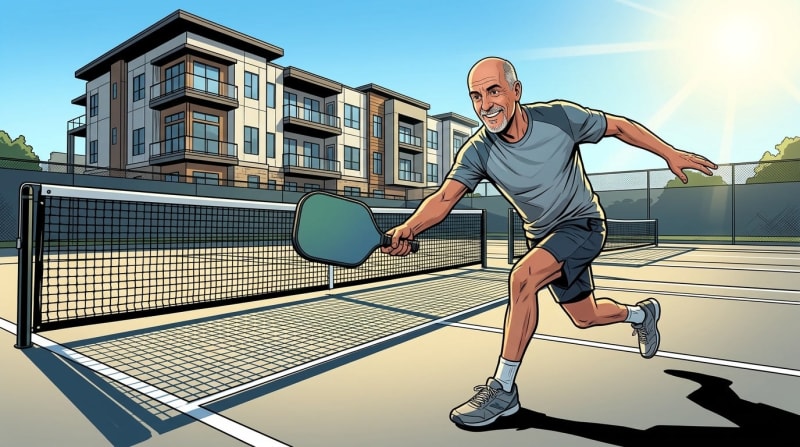
Rule Change 1: The Drop Serve Is Gone at Pro Level
The drop serve has an origin story most serious players know. It was introduced during the COVID-19 era as an accommodation. Standard serve mechanics require contact below the waist, with the paddle head below the wrist — a technically demanding standard that some players found difficult to execute consistently during adaptive periods. The drop serve allowed players to drop the ball, let it bounce, and then strike it, removing several of those requirements.
It was always framed as provisional. As of May 22, 2026, it's gone at the professional level.
The standard serve mechanics remain fully in force and unchanged: the serve must be made with an upward or at least neutral arc motion, contact must occur below the waist, and the paddle head must be below the wrist at the moment of contact. Those rules don't change — the drop serve alternative simply disappears from the options menu in sanctioned competition.
For recreational players, this is largely a non-event. The drop serve was rarely central to casual play. At the recreational level, nothing stops you from dropping and bouncing in a pickup game — but it will no longer be legal in UPA-A sanctioned competition. For competitive players who have built a drop-serve strategy or have been teaching it as a viable tool, the competitive pathway for that serve just closed. Time to reinvest that muscle memory into the standard mechanics.
Paddle Challenges and Video Review Now Cost Points

Paddle Challenges and Video Review Now Cost Points
This is where the new rulebook gets genuinely high-stakes — and where the strategic calculus of competitive play becomes more interesting.
The UPA-A has formalized a paddle challenge system that allows players to contest whether an opponent's paddle meets equipment specifications. Equipment standards have existed before. What's new is the cost structure: a failed paddle challenge draws a fine for the challenger, not a point penalty. Challenge a paddle, lose the challenge — you give up the point. Video review follows the same logic. Request a video review of a call, and if the review doesn't go your way, the point goes against you.
This aligns pickleball with the model used in professional tennis and other sports where the challenge system is made meaningful by giving frivolous challenges a real cost.
The practical effect: challenges become genuinely strategic. In a tight game, a failed challenge isn't just a missed opportunity — it hands your opponent a point. Players and teams will need to assess not just whether they think there's a violation, but whether they're confident enough to stake a point on it.
For recreational players without on-site officials, these provisions don't apply directly. But they're worth understanding as the culture of the game evolves around them. The spirit of the rule — that challenges carry weight — will shape how players think about disputing calls even in informal settings.
Blowing on the Ball Is Now a Fault

Blowing on the Ball Is Now a Fault
This rule gets at something fundamental: the line between playing the game and manipulating conditions in your favor.
The scenario it addresses is specific. Near the kitchen — the non-volley zone — a ball that might clip the line or drift wide can sometimes be influenced by a player who blows on it or fans it with their paddle, trying to redirect it without making a conventional stroke. It's a small action, but in a game decided by millimeters, small actions change outcomes.
The new UPA-A rule codifies what had been a judgment call: any deliberate non-stroke manipulation of the ball — blowing on it, fanning it, using hand or paddle motion to redirect it outside a conventional shot — is now a fault. The behavior is explicitly governed rather than left to referee discretion or informal social enforcement.
As The Dink noted in their rulebook coverage, the governance structure is professionalizing across the board. Rules that were previously handled through informal norms get replaced with explicit language that leaves less room for disagreement — and less room for a disputed call to turn into a disputed match.
The broader principle the rule establishes: anything that deliberately redirects the ball outside of a conventional stroke is governed. Players who have used ball manipulation as part of their game should expect it to be called.
For recreational play, this will surface occasionally. And now there's a clear answer. Does the specificity of this rule change how you think about what's fair near the kitchen?
The New Behavioral Card System and Paddle Throws

The New Behavioral Card System and Paddle Throws
Professional sports have formal systems for managing player conduct. Tennis has code violations. Basketball has technical fouls. Pickleball, for most of its life, has had informal warnings and referee discretion. The UPA-A is changing that structure entirely.
The new behavioral card system operates in tiers, as reported by The Dink:
Warning — A formal verbal or written warning. No points lost. First-level acknowledgment that a line has been crossed.
Blue Card — A formal card issued for conduct that escalates beyond a warning.
Orange Card — Costs the receiving player one point. A meaningful penalty that directly affects the scoreboard.
Four accumulated Orange Cards = Forfeit — Four Orange Cards issued to a player results in forfeit of the game or match.
Paddle throws are specifically named as an Orange Card offense. The paddle slam — a familiar release valve for competitive frustration that has been tolerated in pickleball culture — now carries an automatic point penalty in UPA-A play. Players who have made it a habit will need to rethink it before they step into a sanctioned event.
What would it mean for your local tournament if players knew this standard going in — before the first Orange Card gets issued, not after?
More broadly, this changes the culture of competitive pickleball. Tournament directors and referees now have a structured tool set, not just judgment calls. Structured conduct systems can feel like formality replacing warmth — but consider the other side. A clear, consistent behavioral standard protects every player who shows up to compete in good faith. The gift the card system offers the community is a shared standard, transparently applied. That's actually how belonging scales: not by keeping things informal forever, but by agreeing on what's fair before the game starts.
For club organizers and league directors: this is the rule change that most directly needs proactive communication to your community — now, before May 22.
What Rec Players Should Actually Do Before May 22

What Rec Players Should Actually Do Before May 22
Be honest with yourself about where you play. If your pickleball life consists entirely of drop-in open play, casual doubles with friends, or recreational sessions at a community center, most of these changes will not touch you in any direct way. The UPA-A rulebook governs sanctioned competition. The drop serve elimination, paddle challenges, video review, and behavioral cards are all tournament mechanics.
Two changes have broader reach: the ball manipulation fault and the behavioral card system. Both address behaviors that exist in recreational play — blowing on a ball happens, conduct issues happen — and now there is explicit language for them. If you are a recreational player who cares about playing by the current rules, read these two specifically.
If you run a local ladder, a club league, or any organized recreational competition: May 22 is your action date. Communicate the behavioral card system to your participants before they encounter it for the first time at an event. The point penalty attached to the Orange Card and the forfeit threshold at four Orange Cards are not intuitive — players need to know about them before the match, not during it.
Where to read the full rulebook: The Dink's coverage of the UPA-A rulebook release is a strong starting point, and the UPA-A is the authoritative source for the complete document. Read it and share the relevant sections with whoever runs your local competitive program.
The honest framing: pickleball is professionalizing, and the rules are professionalizing with it. That's not a threat to recreational play — it's a sign the sport is being taken seriously. Every sport you've watched or played has gone through this exact transition. Pickleball is going through it now, on a faster timeline than almost any sport in history.
The courts you play on every week aren't becoming less welcoming. The competitive pathway above them is becoming more structured. Those two things can both be true at the same time — and that's worth appreciating.
Which of these six changes are you most curious about? And if you run a local program, what's the first conversation you're having with your players?
Content ID: n825x9zdA3tTaNQFy6IsxNEY
See an error? Tell us.
Comments
Share with the Community