
How to Beat Bangers in Pickleball: The Reset System That Actually Works
The Short Version
- Bangers skip the transition zone entirely and drive from mid-court on every ball — but that high-variance strategy fails once you stop feeding them pace to redirect.
- The continental grip is the foundation of blocking drives; it handles balls at any height without a grip change mid-rally, which eastern-grip players struggle with against hard shots.
- Top-level players step back 2-3 feet from the NVZ line against consistent bangers — not as a retreat, but to gain the reaction time a 40 mph drive won't allow at the kitchen.
- Aimed at the banger's feet (below net height), a well-executed block prevents the follow-up drive — turning what looks like a defensive shot into an offensive one.
- Banger unforced error rates climb sharply as rally length increases — blocking three or four drives back low is often enough to trigger the miss you've been waiting for.
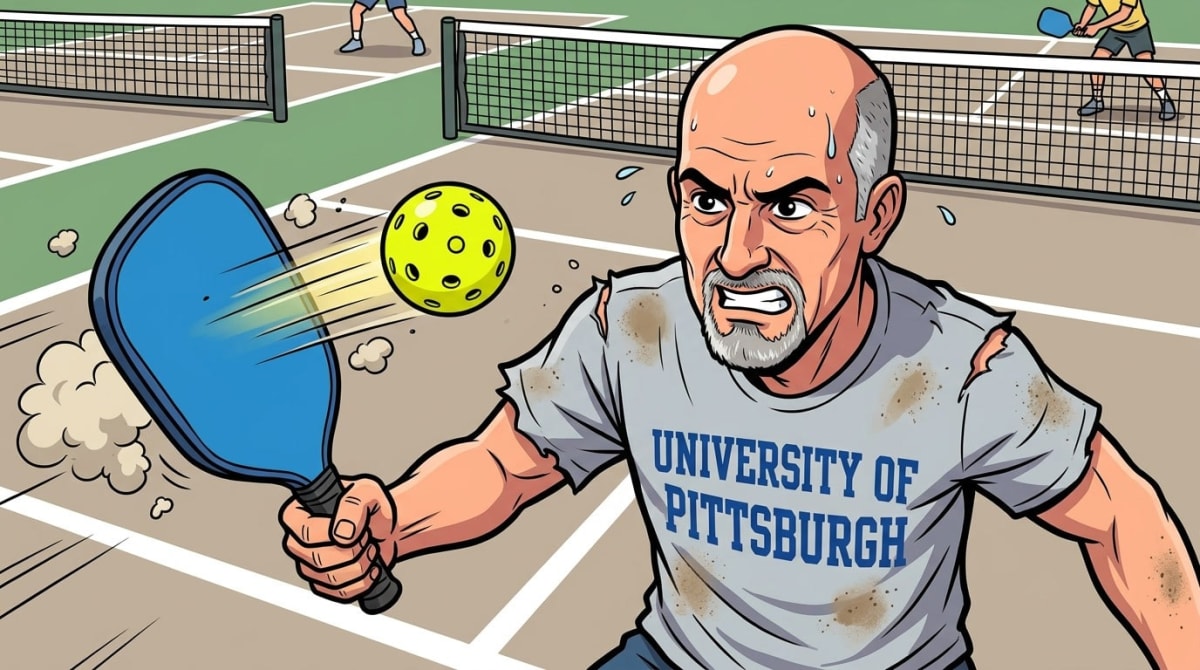
You know exactly when it's going to happen. You step up to the kitchen, get your paddle ready, and the very next ball comes screaming at your chest like it has something to prove. You block it back. They drive again. You try a reset. They drive again. You dink to open the rally. They drive that, too.
At some point you start wondering if your understanding of how pickleball is supposed to work is fundamentally broken.
It isn't. But learning how to beat bangers in pickleball means building a specific counter-system — not just a better soft game, but a deliberate approach that turns the banger's greatest strength into the reason they lose.
Why Your Good Technique Loses to Bangers
Why Your Good Technique Loses to Bangers
The banger is not playing carelessly. They're running a calculated bet: every drive is a wager that you won't be able to absorb the pace and reset it neutrally. At recreational levels, that bet wins more than it loses — not because bangers are better players, but because the strategy exploits an instinct most rec players can't suppress.
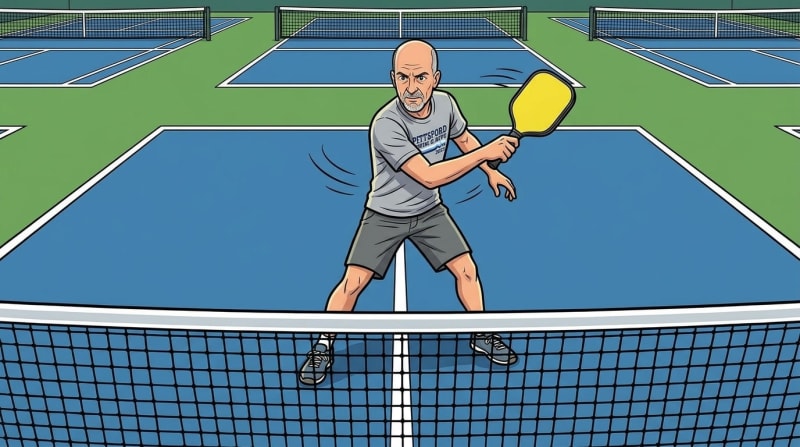
Standard pickleball strategy runs on transition-zone management. You serve, work a third-shot drop, advance to the kitchen, and play the soft game. That sequence assumes both teams are working their way forward. Bangers opt out entirely. They skip the transition zone and go for winners from mid-court on every ball, perfectly comfortable staying in no man's land indefinitely. The rhythm that technique-focused players rely on — advance, dink, build, attack — requires an opponent who is also trying to advance. The banger isn't coming.
The typical rec player's instinct against this is to absorb, reset, and dink their way back into the pattern. That breaks down because the banger never joined the pattern to begin with. And when the frustration builds — when you've absorbed six consecutive drives and nothing is working — most players eventually try to out-drive the driver. That's when you hand them the match.
Here's what the banger is actually giving up: transition-zone neutrality. By skipping the kitchen and driving from mid-court, they're committing to a high-variance strategy. According to the pickleball community on Reddit, bangers are most effective against players who try to match pace — and most vulnerable against players patient enough to let them self-destruct. The rec player consensus is clear: the reset approach, not the counter-drive, wins.
Here's how different responses to banger drives play out at the recreational level:
The gap between blocking-and-resetting and trying to out-drive the banger is the whole story. The frustrating thing is that the better answer is also the less satisfying one in the moment.
The Block: Your First Line of Defense Against Bangers
The Block: Your First Line of Defense Against Bangers
Most players think blocking a drive means hitting it softly. That's not quite right. A block is a specific technique — a short-swing deflection that removes pace from the incoming ball instead of adding to it.
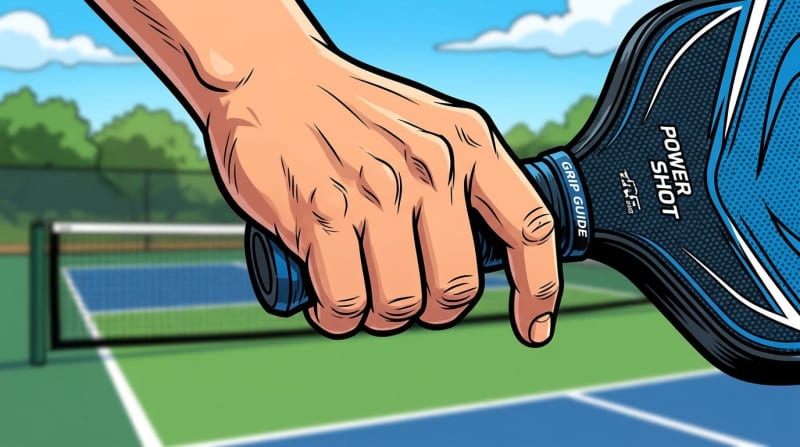
The foundation is the continental grip. Hold the paddle like a hammer, with the base knuckle of your index finger on the top bevel. The Dink identifies the continental grip as the recommended approach for blocking drives — it allows quick adaptation to balls at different heights without a grip change mid-rally. Most rec players default to an eastern grip and struggle with high balls because eastern locks you into one contact plane. Continental solves that problem.
Three mechanics that matter:
Paddle up before the ball arrives. Not as it arrives — before. If you're reacting after the ball leaves the opponent's paddle, you're already late.
Grip pressure at about 3 out of 10. Pickleball Rookie calls this "soft hands" — the incoming ball pushes the paddle back slightly, and that give is what absorbs the pace. You're not counterswinging. You're deflecting.
Aim for the banger's feet. Specifically, target a landing spot below net height on their side of the court. Per Pickleball Rookie, a ball landing at the feet prevents the banger from driving from the same contact — it forces either a reset (not their game) or a drive upward that floats high enough for you to attack.
That last point is the part most players miss: the block isn't purely defensive. Aimed correctly, it's an offensive tool disguised as a neutral one.
Changing your grip mid-session feels awkward at first. Give yourself one focused session where you practice continental blocks on every return and reset — the discomfort resolves faster than you'd expect. What would it look like if soft hands became your first instinct instead of your fallback?
The Speed-Up Counter: Turning Their Pace Against Them
The Speed-Up Counter: Turning Their Pace Against Them
The block keeps you in the rally. The counter-attack is how you shift it.
Bangers practice their drive. What they don't practice — because their entire game is designed to avoid it — is resetting from the NVZ when a fast ball comes back at them. Their hands at the kitchen line are almost always the weakest part of their game.
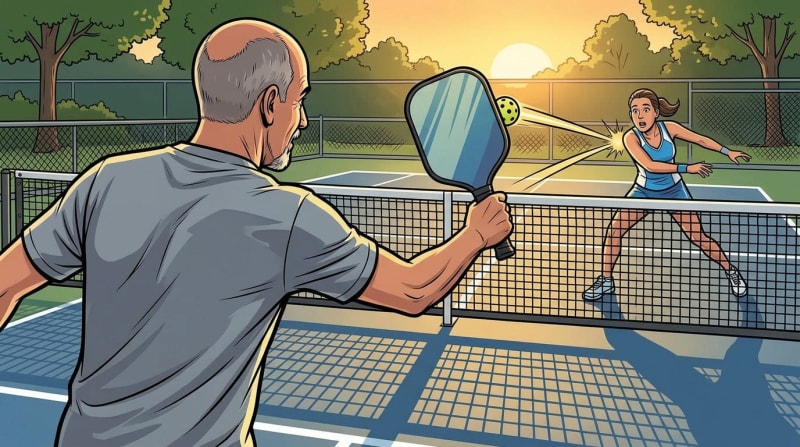
When a drive comes in slightly high or slightly wide — enough that you have a fraction more time than usual — redirect it aggressively toward the banger's non-dominant shoulder or hip. Short punch, not a full swing. You're not generating pace from scratch. You're borrowing their pace and adding direction.
The target matters. Non-dominant shoulder or hip creates the hardest body-shot to handle. It forces either an awkward backpedal or a jammed swing, and even experienced bangers struggle with a well-timed counter aimed there.
The r/pickleball community is consistent on this: redirecting beats counter-driving in nearly every documented rec matchup. The counter doesn't require you to hit harder than the banger. It requires you to hit smarter.
Two things to keep in mind. Use the counter sparingly — if you go for it every rally, you've abandoned the patient game and drifted into territory where bangers are strongest. And pick your moment carefully: a laser to your backhand hip is not a counter opportunity. That's a block.
Court Position: Where to Stand Against Bangers
Court Position: Where to Stand Against Bangers
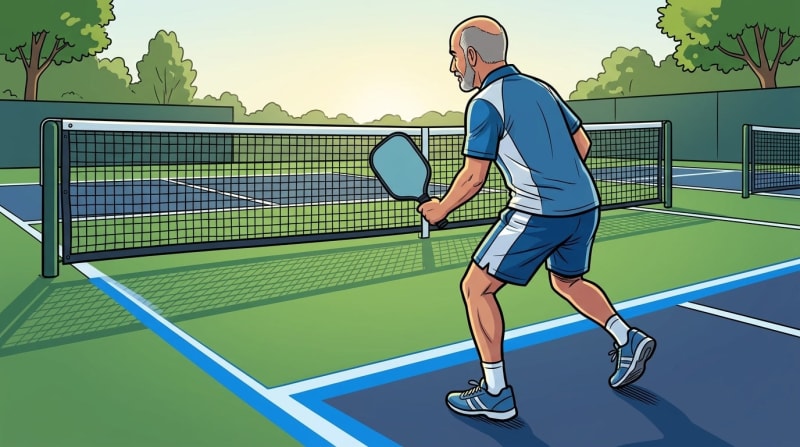
Here's the adjustment that feels like giving up but isn't: step back.
The Dink reports that top players consistently step back 2-3 feet from the NVZ line when facing consistent bangers, rather than trying to defend at the kitchen. It's not retreating. It's buying reaction time that simply doesn't exist at the NVZ against a 40 mph drive.
The math is straightforward. A 40 mph drive travels roughly 59 feet per second. At the kitchen line, with approximately 44 feet between you and the banger's contact point, you have about 0.75 seconds to read and respond. Step back 6 feet and that window extends to about 0.85 seconds. That sounds small. On the court, it's the difference between an emergency shot and a manageable one.
The trade-off is real. Stepping back sacrifices kitchen dominance temporarily — your attacks are less effective, your dinks travel farther. But against a player driving hard at you on every ball, that trade is almost always worth it.
The approach that works: if a banger has driven three or more consecutive hard balls, step back a half-step. Once your blocks are consistently coming back low and slowing the pattern down, creep forward again. You're not abandoning the kitchen line. You're adjusting to this specific opponent in this specific moment — and then reclaiming your ground once you've earned it back.
Making Bangers Beat Themselves Over Time
Making Bangers Beat Themselves Over Time
This is the part that's hardest to believe when you're in the middle of a match and getting driven at repeatedly: patience is the primary weapon.
Bangers make more unforced errors than dink-focused players. Consistently. The driving game demands power and precision simultaneously, and at recreational levels, that combination degrades as a rally extends. The pickleball community on Reddit has documented this repeatedly: patience wins the majority of banger matchups because the banger's strategy eventually breaks down against a calm opponent who keeps returning low.
The sequence to trust: block the first drive back low. Block the second. Block the third. After three or four consistently low returns, most rec-level bangers will either drive into the net, pop one up as an easy put-away, or — best of all — attempt a dink.
When a banger tries to dink, the match has already shifted. Their soft game is almost always underdeveloped — they designed their strategy to avoid needing it. The moment you force them to the kitchen, you're playing against the part of their skill set they've worked least on. That's where the match opens up.
"Patience isn't passive. Against a banger, it's the most aggressive thing on the court."
The hardest part is psychological. Bangers play to your frustration. Every hard drive is a dare: hit me back harder. The moment you accept the dare, you're playing their game on their terms, against someone who has practiced that game more than you have.
Here's what players who handle bangers best have figured out: calm hands at the reset are worth more than the hardest drive you can produce. That skill — staying composed while pace is coming at you — transfers into every match you play, not just the ones against bangers.
Every banger at your local courts is an invitation to build that composure. Find one. Play them more than once. By the third time you share a court, you'll be carrying something that shows up in every game after that.
Content ID: qYg0U5Zv4VJGzJgMJZ4eaLlX
See an error? Tell us.
Comments
Share with the Community