
Burned Out on Pickleball? Why It Happens and How to Love the Game Again
The Short Version
- Players who go from first game to five or six sessions per week within months are the highest burnout risk — the speed of the acceleration matters as much as the total volume.
- Pickleball burnout shows up in all three dimensions at once: physical overuse injuries to the elbow, shoulder, and knee; mental score-obsession that turns recreation into obligation; and social withdrawal from the group that used to feel like belonging.
- Tournament entry fees average $85 per event, and the combined weight of membership costs, gear investment, and community expectations makes deliberate rest feel like betrayal rather than recovery.
- Sports science is clear: three to four sessions per week with genuine rest days between is not playing less — it's the sustainable baseline that keeps players healthy and in the game for years.
- The most durable pickleball communities build culture around belonging, not just competition — social-only sessions and experienced players who model sustainable engagement give everyone else permission to pull back without it meaning anything.
There is a particular silence that shows up on pickleball courts after someone burns out. A regular player stops showing up. Texts go unread. Someone mentions they ran into them and they said they're "just taking a little break." Three months later, they're still on that break. The court keeps playing. Life keeps going. Nobody quite knows what happened.
Pickleball burnout is real — and it is spreading inside the very communities that make this sport worth playing. The same social magnetism that pulls people in, the way you can always find a game and always find your people, is also what makes it so easy to overdo. This piece is about understanding that dynamic, and what becomes possible when a community decides to address it honestly.
The Honeymoon Phase and the Crash
The Honeymoon Phase and the Crash
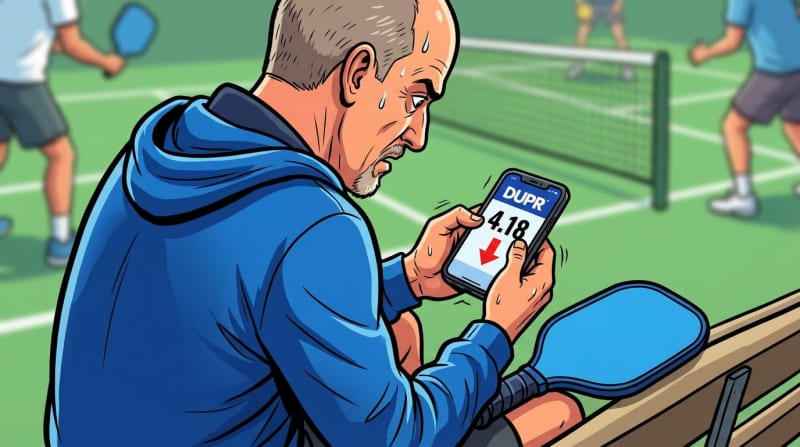
Most pickleball stories follow the same arc. Someone tries the game — usually at a rec center or through a friend — expecting a casual afternoon. Two hours later they're looking up court times. Within a month they've bought a real paddle. Within three months they're playing four or five days a week. Within six months they're tracking their DUPR rating after every session and watching the number the way they used to watch a stock ticker.
According to Pickleball Union, players who accelerate from their first game to five or six sessions per week within the first few months carry the highest burnout risk. The speed of that acceleration matters — not just the total volume.
The sport's explosive growth makes this pattern easier to understand. According to the Sports & Fitness Industry Association, pickleball grew from 4.8 million participants in 2021 to 8.9 million in 2022 — an 85% single-year jump. That curve at the community level mirrors what happens inside individual players: fast entry, fast commitment, fast saturation.
The DUPR rating system accelerates the burnout pipeline in a specific way. DUPR tracks every rated game in real time and recalculates your score with each result. For competitive players, that transparency is exactly what they want. For the majority of recreational players, it quietly converts an afternoon of play into a performance review. Suddenly there's a number to protect. Missing a session feels like lost data. Losing to someone rated below you feels like a step backward. The thing that was supposed to be recreation starts to feel like obligation without a paycheck.
What does it mean when a sport this fun starts to feel mandatory? That question is worth sitting with.
What Burnout Actually Looks Like in Pickleball
What Burnout Actually Looks Like in Pickleball
Pickleball burnout isn't dramatic. It usually starts small.
The physical signs come first. Players who compete five or more days per week face a disproportionate risk of overuse injuries — particularly to the elbow, shoulder, knee, and wrist. The repetitive mechanics of pickleball, especially the dinking and kitchen work that define high-level recreational play, place consistent load on the same tendons and joints day after day. According to injury reporting from The Dink, pickleball-related overuse injuries have grown proportionally with the sport's participation surge. The game's low perceived intensity — it feels gentler than tennis — masks a real cumulative physical toll.
The mental signs are subtler and harder to name. The player who used to arrive twenty minutes early starts showing up at game time, then a few minutes late. The score obsession that once felt motivating starts feeling like weight. Partner frustration — the irritation that leaks out when your doubles partner misses a reset you needed — begins bleeding into what was supposed to be recreation. Dreading a game you used to love is the clearest signal of all. Not dreading the commute or the weather. Dreading the game itself.
The social signs complete the picture. Players start declining invitations they would have accepted automatically six months ago. Tournament fatigue sets in — not just physical exhaustion but the flattening sense that competing again this weekend feels like a commitment rather than a choice. The regular group that once felt like belonging starts to feel like an obligation you can no longer fully meet.
All three dimensions usually appear together. The player who develops elbow tendinitis around month seven often stops enjoying the game around the same time. The correlation is not coincidence.
Why Pickleball Burnout Hits Different
Why Pickleball Burnout Hits Different
Most sports have natural off-ramps. The season ends. The weather changes. Your league takes a winter break. Pickleball — especially indoors — has fewer structural stopping points, and the community culture makes it unusually difficult to opt out without it meaning something.
The pressure to always say yes to a game is subtle but real. When your regular group texts to see if you're in, declining carries social weight it wouldn't in most other athletic contexts. Pickleball communities are genuinely warm and inclusive — that warmth is one of their greatest gifts — but that same warmth can make opting out feel like opting out of something larger than a game. The FOMO around open play sessions and league nights is specific and easy to underestimate.
Financial commitment layers on top of social pressure. Players who get serious quickly accumulate facility memberships, paddles, shoes, bags, and tournament entry fees that create a sunk cost effect. According to The Dink, tournament registration fees average $85 or more per event — and active competitive players often enter multiple tournaments per month. When you've invested that kind of money, a deliberate rest day can feel like waste.
The combination of community pressure, FOMO, financial commitment, and a sport with no natural off-season creates burnout conditions that are genuinely unusual in recreational athletics. That combination arrives in the same package as pickleball's greatest strengths: its accessibility, its social texture, its willingness to hold everyone regardless of skill level. Understanding the risk doesn't diminish those strengths. It helps protect them.
How to Reset Without Quitting
How to Reset Without Quitting
The answer isn't to play less forever. The answer is to play differently — with recovery built in as a feature, not a sign of weakness.
Sports science on overtraining is consistent across decades: rest is not the absence of improvement. It is part of the process. Muscles, tendons, and connective tissue repair and adapt during recovery time, not during play. The American College of Sports Medicine recommends at least two full rest days per week for recreational racket sport athletes — a baseline that most committed pickleball players routinely skip in the early enthusiasm of the sport.
Three to four sessions per week, spaced with genuine rest between them, is a sustainable baseline for most recreational players. Within those sessions, varying the format breaks monotony in ways a rest day alone can't. A dedicated drill session, a social open play with no score-keeping, one competitive game. The sameness of format-every-day is its own quiet burnout driver that rarely gets named.
cross-training tends to feel productive rather than like deprivation — which matters when a player's identity has become tied to the game. Yoga builds the hip stability and rotational balance that survive a long pickleball career. Swimming takes load off joints while sustaining cardiorespiratory fitness. Cycling extends endurance without the repetitive wrist and elbow stress of paddle work. Players who cross-train report fewer overuse injuries. More importantly, they come back to the pickleball court actually missing it. That's exactly where you want to be.
When did you last play a full session without tracking the score at all? That's one honest place to start.
What the Community Can Do
What the Community Can Do
Individual players can restructure their own schedules. But the culture of a pickleball community is built collectively — and the clubs doing this well are offering something the rest of the sport needs to see.
The most durable pickleball communities understand that not every session has to be competitive. Social-only events — mixers, beginner showcases, post-play cookouts that aren't tied to a ladder or a league — create belonging without performance pressure. When a club has a "light play" session on the regular schedule alongside its league nights, it signals clearly that showing up just to have fun is valid. Not everything has to count. That signal matters more than any individual session does.
"The paddle doesn't matter half as much as the conversation you have while waiting to play."
Experienced players carry a particular responsibility here. When the 4.5 player in your group visibly enjoys a casual rec session without treating it as beneath them, it gives everyone else permission to do the same. When they mention openly that they took a week off and came back feeling sharper — on the court and off it — that story travels through a community. It models something many newer players need explicit permission to do: pull back without it meaning anything about their commitment or their love for the game.
The sport's deepest gift is what happens between the points — the conversations at the net, the friendships that extend into other parts of people's lives, the sense of belonging that forms when a group of strangers starts genuinely showing up for each other. That gift is available at three days a week. It does not require six.
What would your pickleball community look like if sustainable play was treated as part of the culture — not the exception to it?
Content ID: rCYw2R3p5ASmpE6CQYHBZ2oB
See an error? Tell us.
Comments
Share with the Community