

Who Is Tama Shimabukuro? The 15-Year-Old Who Just Changed the PPA Tour
The Short Version
- Tama Shimabukuro, age 15, beat the #2 seed Federico Staksrud in three games as a #22 seed — a 20-position seeding gap that stands as one of the larger upsets in recent PPA Tour history.
- The crowd named it 'Tama Town' by day three of the Atlanta tournament; within 48 hours the name had become a social media rallying cry with no marketing budget behind it.
- He reached the gold medal match in singles and the semifinals in doubles simultaneously — two draws, two deep runs at a single event.
- Ben Haworth's 11-5, 11-1 gold medal close is the clearest evidence of what the game's ceiling looks like — which makes it more impressive that a 15-year-old got there, not less.
- Junior pickleball pathways through USA Pickleball now connect local play to national championships and, potentially, professional draws — Tama's run made that pipeline visible in a way no brochure could.
Tama Shimabukuro pickleball became a phrase fans worldwide started typing into search bars mid-tournament in Atlanta — not after the fact, but while the run was still happening. Tama was fifteen years old and seeded 22nd when he arrived at the PPA Tour's Atlanta event. He left as the silver medalist in men's singles, having beaten four higher-ranked opponents on the way to the gold medal match. By day three, the crowd had already given the moment its name.
Tama Town.
Tama Shimabukuro's Atlanta Run, Match by Match
Tama entered the men's singles draw as the 22nd seed — a legitimate professional standing, but not the kind of number that puts you on anyone's medal contender list. What followed was a four-match sequence that changed those assumptions entirely.
He beat the 13th seed in the opening rounds, then stepped onto the court against Federico Staksrud, the second-ranked player on the PPA Tour. The match went three games. Tama won. He followed that by eliminating the 11th seed, then James Johnson, the third-ranked player on tour. Four opponents. Four wins.
Here's what those seeding gaps looked like across the bracket:
The gold medal match against Ben Haworth — ranked first in the world — ended 11-5, 11-1. That's not a bracket fluke; that's the best player in the game closing out clean. But the path to that match? That was entirely Tama.
He also competed in doubles alongside Yuta Funemizu, and the pair reached the semifinals after upsetting the second-seeded doubles team. Two draws. Two deep runs. One tournament that changed what the next few years of this sport's story looks like.
How 'Tama Town' Was Born
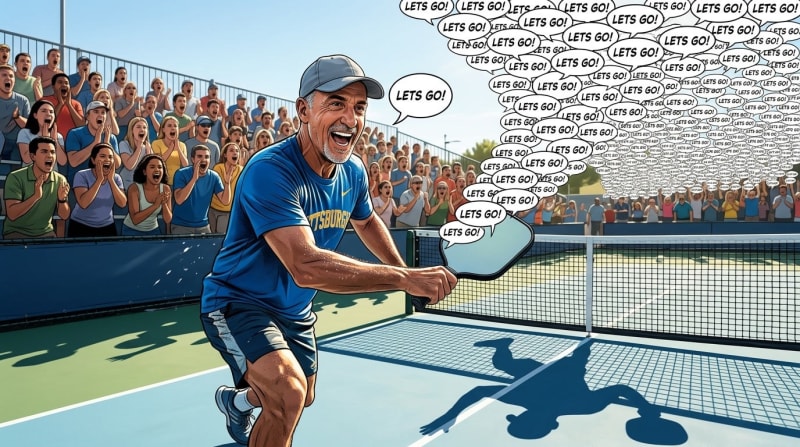
How 'Tama Town' Was Born
Organic fan moments don't get manufactured. They don't come from broadcast packages or sponsor activations. They come from the stands, when a crowd decides collectively that someone has earned their attention — and then acts on it.
The Dink, which covered the Atlanta tournament closely, reported that the "Tama Town" name had taken hold by day three of the event. From there it moved fast — within 48 hours it had become a social media rallying cry, the kind that travels because it's genuinely earned, not because an account pushed it.
The PPA Tour has been building professional infrastructure with an eye toward exactly this kind of story. What the tour can do is create the stage. What it can't do is create the moment. Tama created the moment.
The crowd in Atlanta gave him that name not because he had already won, but because he was playing with a specific kind of fearlessness that crowds recognize before they can articulate it. The sport has spent years trying to produce a moment like this. A fifteen-year-old from Hawaii went and made it happen without a marketing plan.
What does it say about a sport when its most talked-about moment of the weekend is spontaneous?
The Hawaii-to-PPA Pipeline

The Hawaii-to-PPA Pipeline
Hawaii produces athletes differently. The year-round outdoor climate means more reps, more court time, and more competitive play compressed into twelve months than most players in northern states can accumulate in eighteen. Outdoor courts stay open in January. The same conditions that make Hawaii what it is also make it an unusually productive environment for building sport-specific skill at a young age.
USA Pickleball sanctions junior events across all age divisions and has grown its national junior championship infrastructure alongside the sport's overall rise. For a player working toward professional competition, the pathway now has real, navigable steps: local play, state-level sanctioned events, national juniors, and then the professional draw. That pipeline exists. Tama walked through it.
Hawaii's pickleball community has expanded rapidly alongside the national surge, with courts available across Oahu, Maui, and the Big Island, and a local competitive scene that produces real tournament reps rather than recreational play alone. The outdoor playing advantage isn't just comfort — it's accumulated time on court that compounds over years.
Other junior players have crossed into professional competition before — the sport is young enough that its first generation of lifelong players are still in their twenties and thirties. But reaching a PPA gold medal match at fifteen is a different category. That's not a transition story. That's a new data point about what's possible.
What the Finals Could Mean
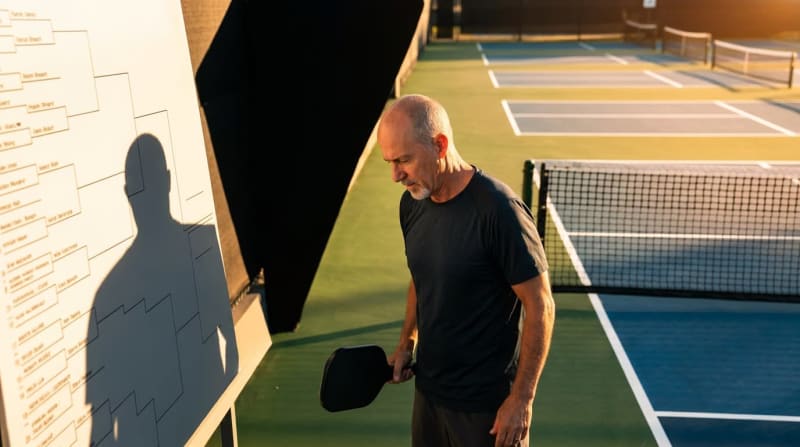
What the Finals Could Mean
The PPA Finals are running May 6-10 — right now, as this publishes. Tama enters not as a feel-good story the tour is carrying, but as a seeded competitor who earned that position in Atlanta. The bracket doesn't have a sympathy slot.
The question the Finals bracket asks is legitimate: was Atlanta a convergence of optimal conditions — the right draw, the right week, the right crowd energy — or does the level hold? Ben Haworth's 11-5, 11-1 gold medal close is the clearest counterweight the record could offer. That's what the top of the game looks like when it closes without sympathy.
But a 15-year-old who reached his first PPA gold medal match operates under a different psychological contract than a ranked professional with career implications on every scoreboard. The bracket pressure that shapes how a seeded player manages risk doesn't weigh the same on someone who can still afford to play fearlessly. That asymmetry matters in close matches.
Whether the Finals produce a second Tama chapter or a more expected result, the Atlanta run is already fixed in the record. The story doesn't need this week to validate it.
It would be something, though, wouldn't it?
What This Means for Rec Players With Kids
Here's the conversation happening at warmups and in parking lots after Sunday morning open play: is this real? Is there actually a professional future in this sport for a kid who loves it enough to chase one?
After Atlanta, the answer is clearly yes — and the pathway is more defined than it's ever been.
USA Pickleball's junior program sanctions events across all age divisions, runs a national junior championship, and has expanded access partnerships with schools and recreation programs across the country. According to USA Pickleball, the sport's overall participation runs into the tens of millions, with the under-18 demographic growing faster than any other segment.
The practical pathway for a junior player looks like this: find local junior programming through your parks department, recreation center, or club; connect with your state's USA Pickleball affiliate; enter sanctioned junior events to start building a competitive record; aim for the national junior championships as a visible milestone. The PPA is further up the same pyramid — and Tama showed that the connection between the base and the top isn't theoretical.
What Tama's run does that no program brochure can is make the ceiling visible. Not someday. Now. A fifteen-year-old reached a professional gold medal match and held a crowd's attention for three days. That image belongs to every junior player who has ever wondered what was actually possible.
The pickleball community has always known how to welcome players at every level — that gift, belonging before competence, has been part of the sport's DNA from the beginning. What's changed is that the professional pathway is real enough for a kid to walk it before finishing high school.
What might be possible for the junior players in your orbit — if they had the right pathway and someone pointing them toward it?
Content ID: bfAiRy9zMTmBkrRxETsC3mxY
See an error? Tell us.

Comments
Share with the Community