
Pickleball Stacking Explained: When and How to Use It in Doubles
The Short Version
- Professional doubles teams at MLP and PPA events stack on nearly every point — it's the standard at the pro level, not an advanced variation.
- Left-handed/right-handed partnerships gain the most from stacking, creating a dual-forehand middle that covers the court's most contested zone on every rally.
- The most common stacking breakdown in rec play isn't the strategy itself — it's the missing signal system; one finger or two fingers behind the back before the serve prevents most pile-ups.
- Half-stacking on the serve is the right entry point for players new to the tactic: lower complexity, real positional benefit, the same core movement mechanics.
- Below 3.5 DUPR with rotating partners, stacking adds complexity without matching benefit; it earns its keep at 3.5+ with a consistent partner who has run the patterns with you.
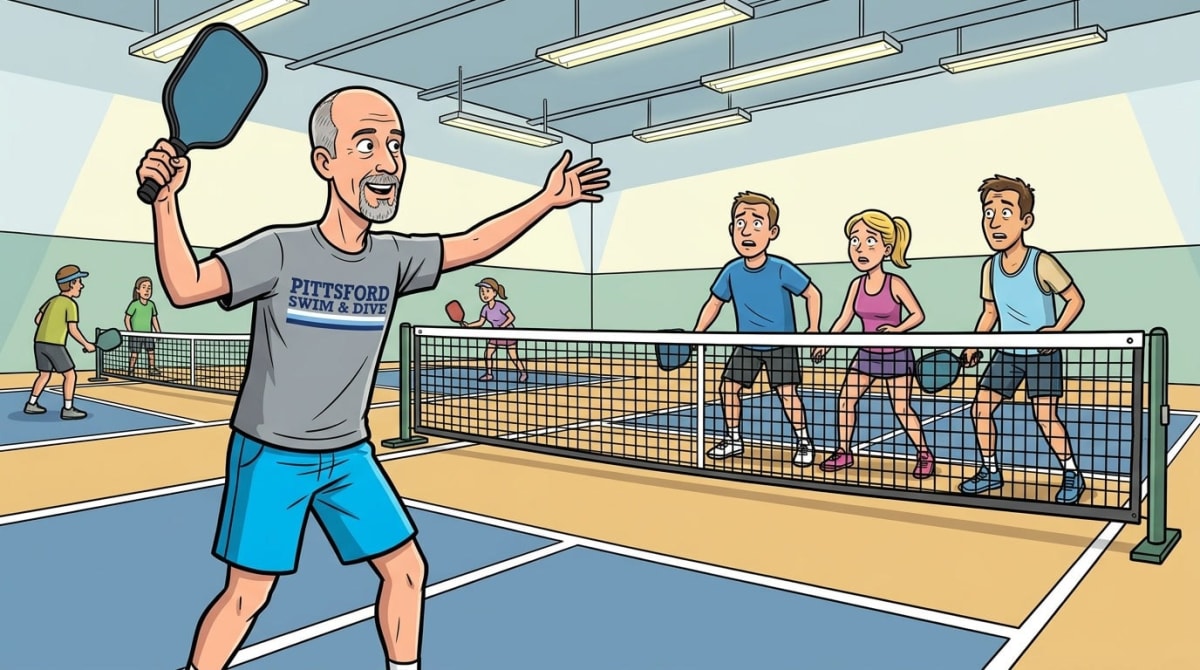
The first time I watched someone run a full stack, I thought there'd been a miscommunication between partners. The server lined up on the wrong side of the court entirely. The non-server crowded toward the center like they were trying to take up less space. Then the serve left the paddle — and they both glided into position like the whole thing had been choreographed.
Which, it turned out, it had.
Pickleball stacking is one of those doubles tactics that looks like confusion from the sideline and reads as strategy from inside it. Once you understand what it's solving, you start seeing it everywhere — and eventually you start wondering what it would solve in your own game.
What Stacking Actually Means in Pickleball

What Stacking Actually Means in Pickleball
Traditional doubles positioning is straightforward: whoever is serving stands on the correct side based on the score, and their partner stands on the opposite side. Even score, server plays right. Odd score, server plays left. The score dictates your position.
The limitation is that your side of the court changes every point, whether or not that serves your game. If you've built your doubles game around a dominant forehand on the right side, you still end up on the left side half the time under traditional positioning.
Stacking solves that. In a stacked formation, both players line up on the same side of the court before the ball is in play, then move into their preferred positions once the serve or return is away. The score still determines who serves from where — that's a USA Pickleball rule that doesn't change — but where each player lands after the ball is in play is theirs to choose.
Think of it as separating two things traditional positioning bundles together: where you serve from and where you actually play from.
According to The Dink, professional doubles teams stack on nearly every point, optimizing forehand coverage in the middle of the court across every exchange. What you're watching on an MLP broadcast isn't chaos — it's precision positioning. The visibility of MLP team formats has made stacking more recognizable at every level as those partnerships optimize around partner pairings.
Here's what the middle-court coverage difference looks like between the two approaches:
In traditional positioning, roughly half of middle-court balls end up going to a backhand — often the weaker shot in a partnership. Stacking tips that ratio toward the forehand deliberately.
Why Players Stack: The Forehand-Middle Advantage
Why Players Stack: The Forehand-Middle Advantage
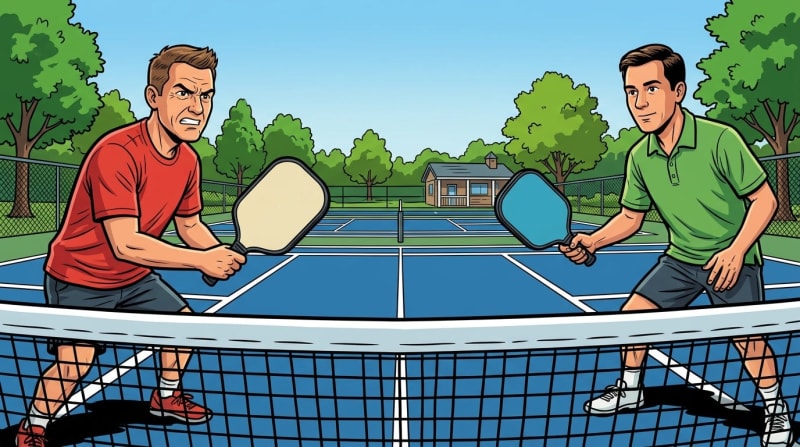
The middle of the court is where doubles games are decided. It's where the third shot drop either threads through or gets picked off, where dinks get redirected, where the erne attempt starts. Whoever owns the middle controls the point.
A forehand is almost always stronger than a backhand for the same player — more range, more topspin capacity, more comfort under pressure. When two right-handed players use traditional positioning, one of them always has their backhand facing the center of the court. Stacking corrects this. One player covers the middle with their forehand while the other covers the outside, and that arrangement stays constant regardless of the score.
The clearest case for stacking is a left-handed/right-handed partnership. When you pair a lefty on the left side with a righty on the right side, both players have their forehands pointing toward the center. Pickleball Magazine calls this the dual-forehand middle — two forehands converging simultaneously on the court's most contested zone. It's a significant structural advantage that stacking makes permanent rather than accidental.
Even in same-handed partnerships, stacking lets the dominant player — the one with the sharper reset, the stronger net game, the dink that opponents avoid — stay in the position where their game does the most damage, every point.
If you and your partner have naturally different strengths on different sides — even if you're both right-handed — there's a version of stacking that serves your game.
When Stacking Helps vs When It Hurts
When Stacking Helps vs When It Hurts
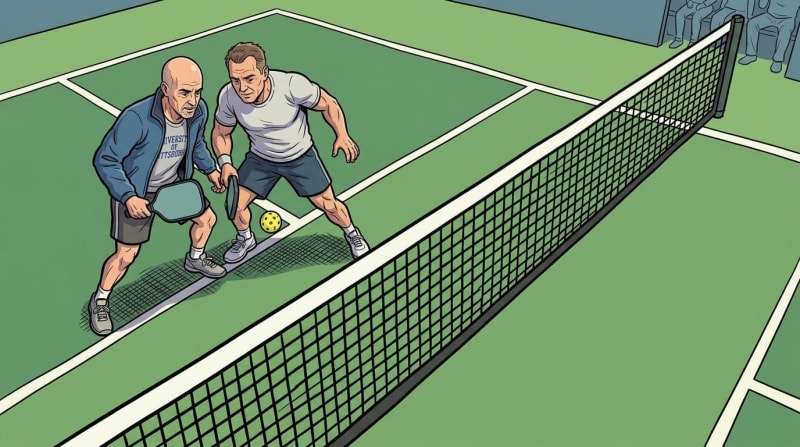
Here's the honest version: stacking isn't always the right move, and adding it to your game before you're ready to run it cleanly will cost you more points than it earns.
Stacking helps when two conditions are both true. First, both players have a clear preferred side — one consistently performs better on the left, the other on the right, and traditional positioning scrambles that every few points. Second, both players have practiced the movement enough that the transition happens without hesitation.
It hurts when either condition is missing. The most common stacking breakdown in rec play is the two-person pile-up: both players drift toward the middle after the serve, nobody covers the open sideline, and the next ball goes exactly where no one is standing. It doesn't happen because the strategy is wrong. It happens because the movement wasn't rehearsed and the signals weren't clear.
There's also a context consideration. With rotating partners in open rec play, your game-day partner hasn't seen your stacking cues and can't adapt in real time to what you're attempting. Stacking works best with a consistent partner who has run the patterns with you.
At the tournament level there's a counter-consideration: sophisticated opponents will recognize your stacking and start targeting the seam your movement creates. The serve goes toward the gap. The return aims at the delayed coverage. This is why high-level teams develop counter-movements — but that's a layer of complexity that only matters once the basic stack is clean.
What does your game look like when your position is scrambled versus when it's stable? That gap is worth noticing.
How to Stack: Step-by-Step for Serving and Returning Teams
How to Stack: Step-by-Step for Serving and Returning Teams
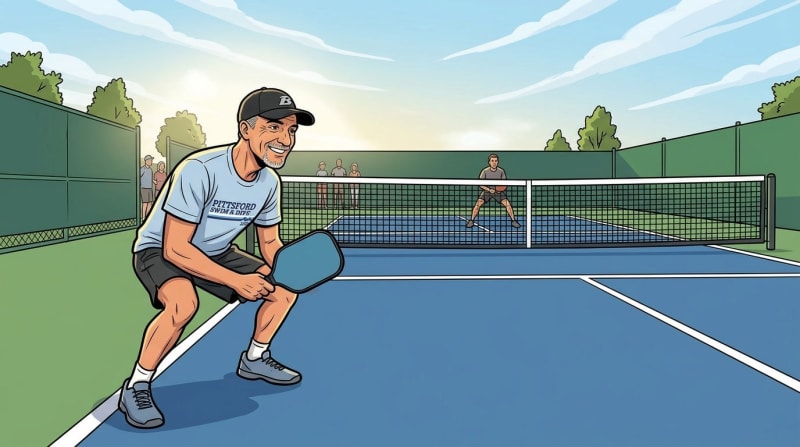
Stacking looks different depending on whether you're the serving team or the returning team. Both require a clear understanding of when to move and where to go.
Serving team stack:
The server lines up on the correct side per the score as always. The non-server — instead of standing on the opposite side — lines up close behind the server, near the sideline, on the same side of the court. After the serve lands and the return is on its way back, both players move: the server transitions to their preferred side, the non-server moves to theirs, and by the time the ball arrives for the third shot, you're both where you want to be.
Timing matters. Move after the ball leaves your paddle on the serve — not before, not so late that you're still moving when the return arrives.
Returning team stack:
The returner lines up to return in their standard spot. The non-returner — instead of standing at the NVZ line on the opposite side — positions close to the sideline near the kitchen line, leaving the full width of the court available for the returner to step into their preferred side after the return is hit. Once the return is away, both shift into position.
The non-returner's discipline is the key here. Staying tight to the sideline before the ball is in play creates the space for the returner to move into. Drifting toward the middle too early blocks the transition.
Half-stacking:
Pickleball Magazine notes that half-stacking — where only the serving team stacks while the returning team plays traditional positioning — is increasingly popular as a lower-complexity entry point. It's a sensible first step. You get real positional benefit without committing to full stack mechanics in both directions simultaneously.
Half-stacking on the serve is the natural starting place. Your partner lines up beside you on the same side. You serve. Your partner moves to their preferred side. That's the whole thing.
Start with the half-stack on the serve. Get the movement dialed in. Add the return-team stack once it feels automatic.
Communication Systems That Actually Work
Communication Systems That Actually Work
Every stacking system lives or dies on communication. The movement itself isn't the hard part. The hard part is your partner knowing which direction you're going before you start going there.
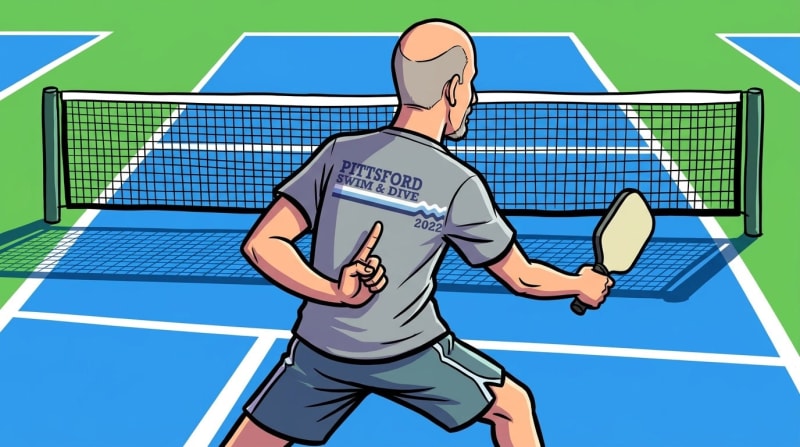
The most reliable system in noisy gym environments is the hand signal behind the back. Before the serve, the player whose role might be ambiguous puts their paddle hand behind their back and signals. One finger: staying right. Two fingers: going left. The signal is visible to your partner and invisible to your opponents.
Hand signals serve another purpose beyond stacking: they indicate poaching intent and switching assignments. A closed fist behind the back can mean "I'm poaching the next ball." An open palm means "stay." A small vocabulary of three or four signals is enough for most rec partnerships, and building it together is half the fun of having a consistent partner.
Verbal cues work too, with one limitation: in a busy gym, short words carry better than long ones. "Mine" and "yours" are reliable in the moment. "Switch" is unambiguous. A full sentence mid-exchange doesn't survive contact with reality.
The most common stacking miscommunication is the non-decision — both players assume the other will move, neither does, and the court stays wrong the whole point. The fix is simple: assign a driver and a follower before the serve. The serving player always initiates the move; the non-server responds to where the server goes. One person leads; one person follows. Make that explicit the first time you try stacking together and the pile-up stops happening.
The signal behind the back costs you nothing. The miscommunication it prevents can cost you the point, the game, and your partner's trust.
Should You Stack at Your Level?

Should You Stack at Your Level?
This is the question worth sitting with before you run a stacking drill.
If you and your consistent partner genuinely don't care which side you play — if your game is equally comfortable on both sides, if your partnership doesn't have a clear forehand advantage to protect — stacking adds complexity without adding benefit. The tactic exists to solve a specific problem. If the problem isn't present in your game, the solution is unnecessary.
If you're playing below 3.5 DUPR consistently, especially with rotating partners, stacking is probably a distraction. The energy spent on positioning mechanics is energy not spent on the third shot drop, the reset, the patient dink — the fundamentals that pay off at every skill level with every partner.
If you're in the 3.5–4.0+ range with a consistent partner, and one of you has a clear side preference or forehand advantage, stacking is worth practicing. Not immediately in competitive play — start in friendly rec games where miscommunications carry lower stakes. Run it in warmups. Signal the movement consciously until it becomes automatic. Give it ten sessions before you evaluate whether it's working.
And if you've found a left-handed partner for a regular game? Stack from day one. The dual-forehand middle is one of the cleanest positional advantages in the sport, and it's there every single point if you're willing to set it up.
The real gift stacking gives you isn't a tactical edge on a single point. It's a shared language with your partner — a vocabulary of movement and signals that deepens how you play together. That's what the best doubles teams have: not just individual skill, but a practice of coordination that builds over time and belongs to both of you.
What does your current doubles partnership look like — and what would it look like if you both spent a session figuring out where you each actually play your best?
Content ID: DIZ4avGE0uejWWDLZoZJOUfR
See an error? Tell us.

Comments
Share with the Community