How to Find Your Pickleball Doubles Partner (And Actually Win Together)
The Short Version
- Finding a doubles partner is less about matching ratings and more about aligning on ambition, playing style, and how you both handle a bad loss — skill is only one layer of compatibility.
- Studies on doubles coordination show that up to 75% of rally errors come from communication failures, not missed shots — a partner who calls the ball and stays positive is worth more than raw talent.
- The DTR moment — going from "informal regulars" to committed partners — is where most promising partnerships stall, and the fix is leading with a specific event invite rather than a general ask.
- Dinkers' Wednesday and Friday night ladder play is the most efficient partner-finding tool in the Rochester area, because the format naturally surfaces players at your level week after week.
- Pros like Ava Ignatowich manage roughly 40 partnerships per year through Instagram DMs and casual conversation — the unspoken rule at every level is that these commitments build incrementally, not all at once.
It's a Lot Like Dating
It's a Lot Like Dating
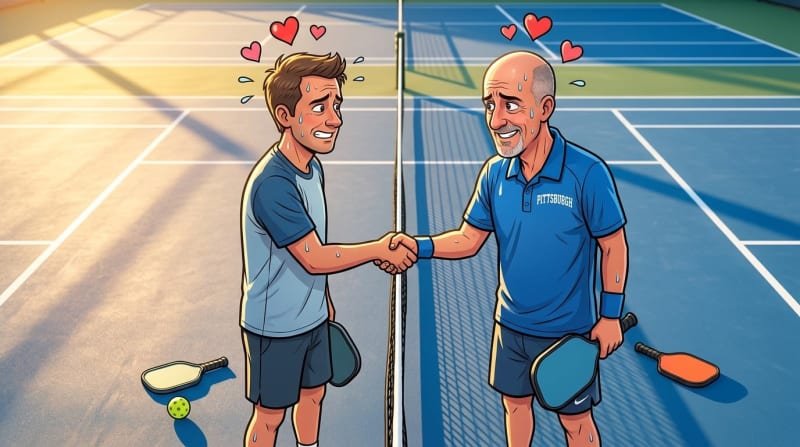
My friend David — a serious 4.3 player who has been at this longer than most — put it better than I could: "Finding a doubles partner is a lot like dating." He didn't mean it as a joke. He meant that the sensitivities are real, the feelings are involved, and moving toward a more serious commitment — playing multiple tournaments together — is a conversation full of nuance. You have to tread lightly. You have to be aware of the other person.
He's right. And the fact that nobody talks about this honestly is part of why it trips so many players up.
Pickleball now has 24.3 million participants in the United States, according to the Sports & Fitness Industry Association — up from just 4.2 million in 2020. The sport is built around doubles. And yet the process of actually finding someone you want to play with — not just next to — is informal, awkward, and almost completely undiscussed.
Even at the professional level, this is a mess. The Dink reported that PPA pros like Ava Ignatowich manage roughly 40 partnerships per year across women's and mixed doubles — coordinated through Instagram DMs, texts, and the occasional awkward conversation at a tournament. "It's not really as intricate or professional as you would think," Ignatowich said. When Camila Zilveti first joined the tour, she emailed potential partners like she was applying for a job. That's not how it works at any level.
What you're actually navigating — at the 3.5 level just as much as the pro tour — is a relationship. With all the care and self-awareness that entails.
What You're Actually Looking For
What You're Actually Looking For
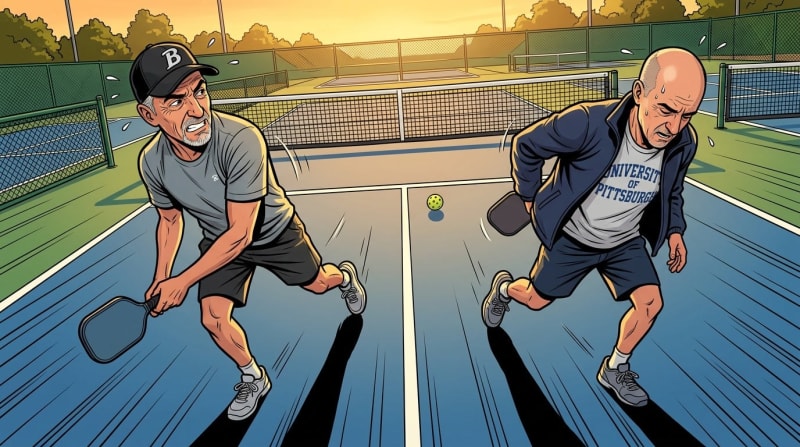
Before you can find the right partner, you need to know what compatibility actually means on a pickleball court. It is not just about matching ratings. David named it well: there are multiple layers here, and misreading any one of them will cost you.
Skill and rating is the obvious one — you need to be close enough that you're not constantly covering for each other or holding each other back. DUPR gives you a live rating from real match data, which is more honest than self-assessment and makes this conversation easier to have.
Playing style matters more than most players realize. Six Zero Pickleball writes that great partnerships are "rarely about two players doing the exact same thing — instead, it's about creating a combination where each player's strengths cover the other's vulnerabilities." Are you a consistent reset player who needs an aggressive partner to finish? Are you a speed-up player who needs someone to hold the soft game while you look for openings? Those pairings work. Two bangers who both want to attack the same ball do not.
Ambition is where most partnerships quietly break down. One player wants to play open play on Tuesdays. The other wants to enter four tournaments before summer. Neither is wrong — but they need to find each other.
Effort and preparation — how seriously each person takes warmup, drilling, watching film, working on weaknesses. A mismatch here will breed resentment.
Personality off the court — because this is the piece that determines whether a partnership survives a bad loss. Empower Pickleball puts it precisely: "The shift that transforms partnerships is subtle but powerful. Instead of thinking, 'I need to save them,' shift to, 'I need to trust them.' Saving creates dependency. Trust creates partnership." Trust is a personality question as much as a technique question.
What dimension do you assess first when you meet someone on the court? What do you tend to overlook until it's too late?
Where to Find Partners in Rochester
Where to Find Partners in Rochester
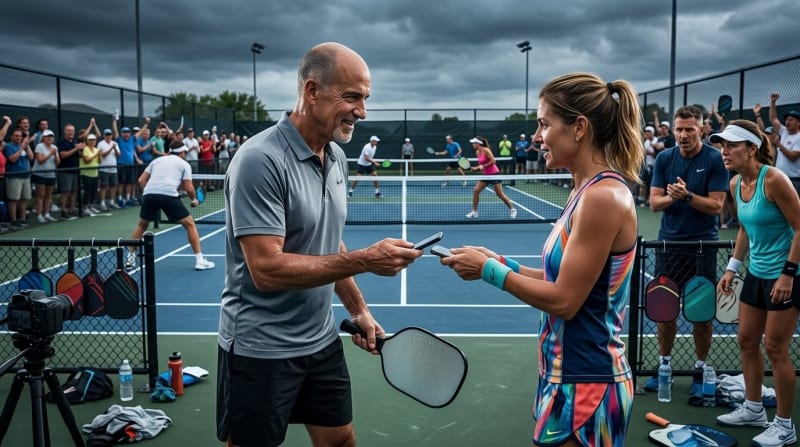
Dinkers Pickleball in East Rochester is the most active club in the area — Monroe County's largest pickleball campus, with 16 courts and a community large enough that you can play with genuinely different people every week. Their Wednesday and Friday night ladder play is the best partner-finding tool in the Rochester area. After a few weeks on the ladder, you naturally sort into your level — the format puts you consistently against and alongside players who match your game, which means when you find someone you click with, you already know they can actually play with you.
Open play at Fishers Park and Fairport Pickleball Club gives you similar volume with a more casual feel — good for early chemistry reads without any commitment pressure. These are your first dates.
DUPR sessions are specifically designed as rated round-robins — which means you get exposure to players at your exact skill level. If you're serious about finding a tournament partner, a few DUPR sessions will tell you more about compatibility than months of casual open play.
USA Pickleball maintains a listing of sanctioned tournaments in New York State with beginner-friendly brackets — lower-stakes entry points where you can try a partner out in competition before you commit to a full season together.
The one thing most players get wrong at this stage: they find someone they like playing with and immediately start talking about tournaments. Slow down. The next section is about why.
The First Dates
The First Dates
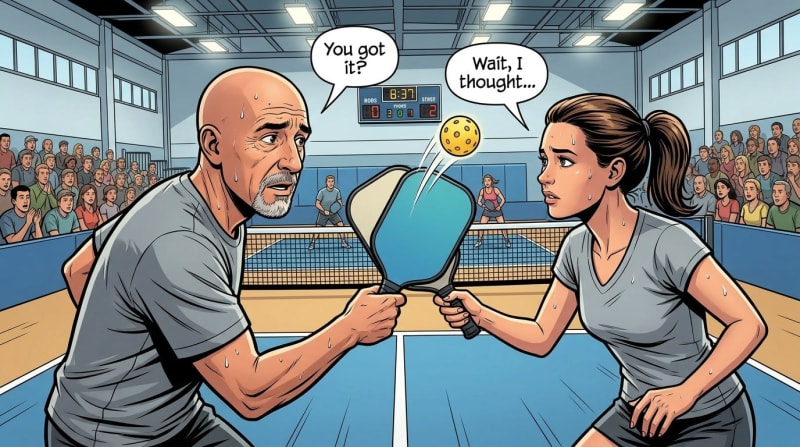
Before anyone talks about commitment, you need time on the court together without the stakes of competition. This is the equivalent of dating casually — enjoying the experience, paying attention to how you feel, not deciding anything yet.
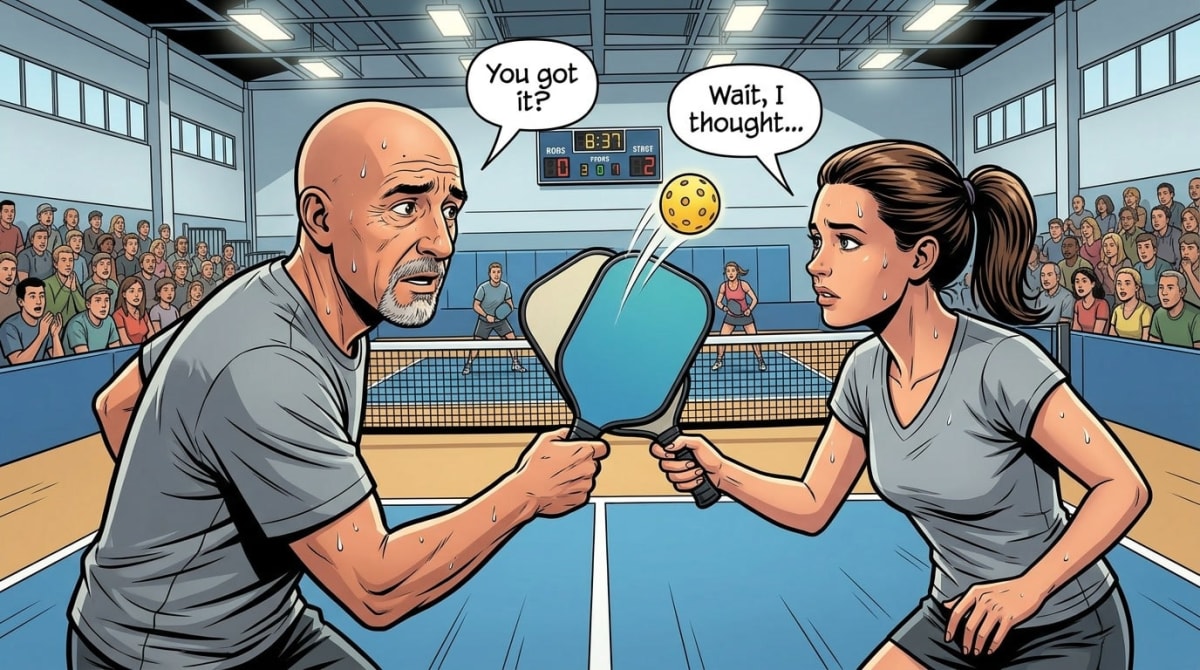
What you're watching for during this phase is court chemistry. Do you communicate naturally, or does every middle ball cause a moment of confusion? Pickleball Nation notes that up to 75% of rally errors in doubles stem from poor coordination — not missed shots, but missed communication. A partner who naturally calls the ball, signals their intentions, and keeps positive energy between points is rare. When you find one, you'll know.
Watch for what happens after a bad point. Selkirk Sport asks the right question: would your partner call you "the best teammate ever"? Not the best player — the best teammate. Those are different things entirely. A partner who fist bumps after your miss and says "let's go" instead of going quiet is worth three rating points on paper.
Also pay attention to what happens when you play poorly. Some players shrink. Others blame the wind. The ones worth committing to keep their eyes up and their energy steady regardless of the scoreboard.
Do a few of these informal sessions before you say anything about playing together in an official capacity. Let the court tell you what it knows.
The DTR Conversation
The DTR Conversation
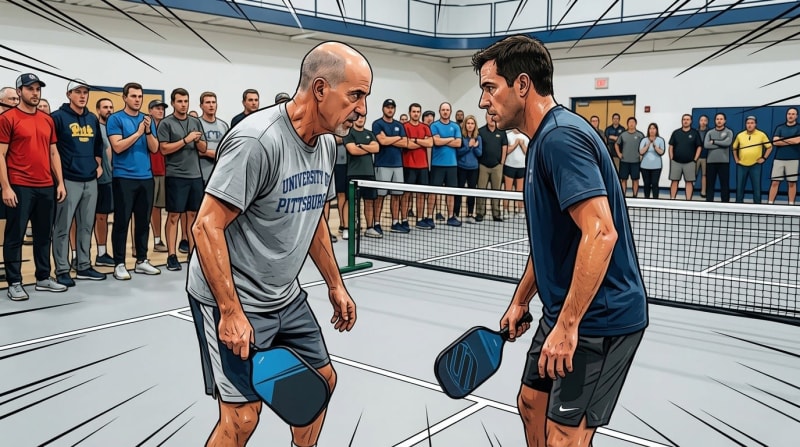
"Defining the relationship" — the moment you go from playing together casually to acknowledging that you're actual partners — is the conversation David was really talking about. And it is genuinely delicate.
Even at the pro level, this is navigated mostly through subtext and implication. The Dink's reporting on Ava Ignatowich and Camila Zilveti reveals a partnership culture built on Instagram DMs and assumed understandings — no formal agreements, no clear timelines. Zilveti once emailed a potential partner and it came across as strange, because the unspoken rule is that these conversations happen casually and incrementally.
For amateurs, the path usually looks something like this:
The key insight in that progression: most of the drop-off happens between "informal regulars" and "first tournament together." That's the DTR moment — and the reason so many promising partnerships stall there is that nobody wants to be the one to say it out loud first.
A few things that help: lead with a specific event rather than a general ask. "Want to enter the Dinkers spring ladder with me in April?" is easier to respond to than "do you want to be my partner?" Give them an easy out if the timing doesn't work. And if they say yes, agree explicitly on a few things before you show up: who covers the middle on the forehand side, whether you're stacking, and — most importantly — what a bad day looks like for each of you and how you want to handle it. Six Zero recommends creating a simple reset phrase together — something like "new point, new opportunity" — so you have a shared language before the pressure arrives.
When It's Not Working
When It's Not Working
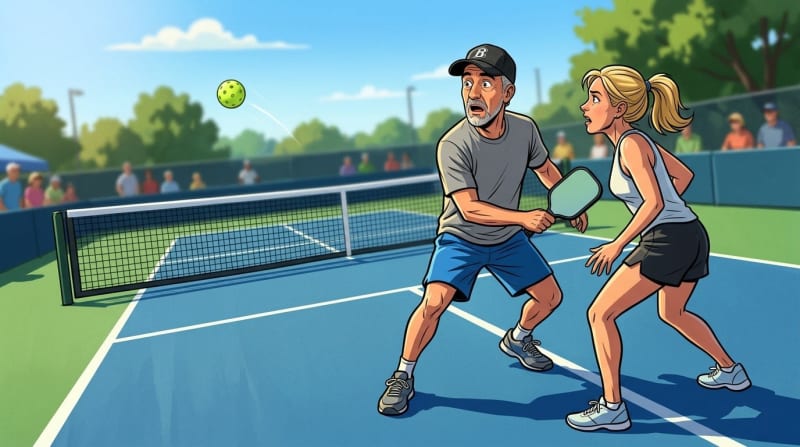
Some partnerships don't survive the first tournament. That's normal. The question is whether you handle the exit with the same care you brought to the beginning.
Empower Pickleball makes the important distinction between saving and trusting. Over-accommodating partners — poaching balls that aren't yours, drifting into your partner's lane, taking over when they're struggling — erodes trust rather than building it. By the time it feels like the partnership isn't working, that pattern is usually already established. If you recognize it happening, it's worth naming before you walk away.
The pickleball community in Rochester is small enough that how you handle a partnership ending matters. A simple "I think we're at different stages with where we want to take our game — I really appreciate playing with you" is enough. The court is too small for burned bridges.
What I find interesting about all of this is that it mirrors what David described so well: the whole arc, from first court chemistry to the DTR conversation to the ending, is just a relationship with a paddle in it. And the same things that make any relationship work — honesty, trust, paying attention — are exactly what makes a doubles partnership work too.
The right partner is already at one of these courts. You've probably already played with them. The only thing left is paying attention.
Content ID: Q3Ne9MKKZkTd6DdNVSWJOfbG
See an error? Tell us.
Comments
Share with the Community