
Coming From Tennis? Here Is Why You Hit a Wall at 4.0 — and What to Unlearn
The Short Version
- Tennis players plateau at 4.0 not from lack of athleticism but from three specific mechanical habits that tennis installed and pickleball actively punishes.
- Staying at the baseline while your opponent controls the kitchen is a structural disadvantage — every ball hit from back there flies upward into a player who can attack it.
- The classic tennis step-and-punch volley mechanic causes constant foot faults at the no-volley zone; the replacement is a roll volley with chest parallel to the net and a low-to-high swing path.
- Soft grip pressure is the single most counter-intuitive reset mechanic: a tight grip transfers pace back into the ball, while a loose grip absorbs it.
- The transition zone between baseline and kitchen is where most 4.0 players break down — learning to split-step and reset there is what breaks the ceiling.
Tennis converts follow a recognizable pattern. They arrive with sharp hand-eye coordination, real court sense, and footwork instincts that took years to build — and within a few months they're playing 3.5, sometimes 4.0. Then the progress stops. According to The Dink Pickleball, most former tennis players improve quickly and then hit a wall around 4.0. The reason isn't fitness or athleticism. It's three specific tennis habits that pickleball actively punishes — and these tennis player pickleball tips are about naming each one and replacing it with something that actually works.
Why Staying Back at the Baseline Is the Wrong Default
Why Staying Back at the Baseline Is the Wrong Default
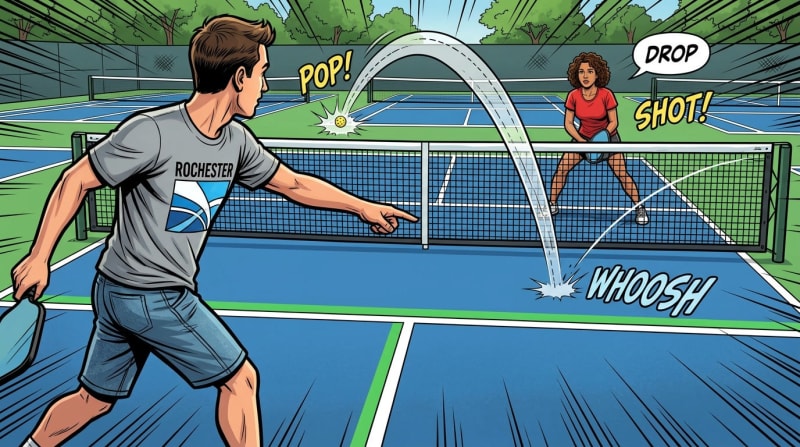
Tennis rewards deep groundstrokes and aggressive baseline play. That strategy transfers to pickleball for exactly as long as your opponent is also at the baseline — which in a real game, they are not. In pickleball, points are won at the no-volley zone, not the baseline. Every ball you hit from the back while your opponent controls the kitchen is flying upward into someone who can redirect it anywhere they want.
The shot that changes this is the third shot drop. After the serve, instead of launching a baseline groundstroke, you hit a soft arc that lands at your opponent's feet and forces them to hit upward. That upward ball gives you time to advance toward the kitchen. Tennis players who stay back and bang think they're playing offense. They're handing position to the other team.
The fix is mental before it's mechanical. Your goal after the serve is not to win the point from the back — it's to get to the kitchen line.
Your Tennis Volley Creates Foot Faults — Here Is What to Do Instead
Your Tennis Volley Creates Foot Faults — Here Is What to Do Instead
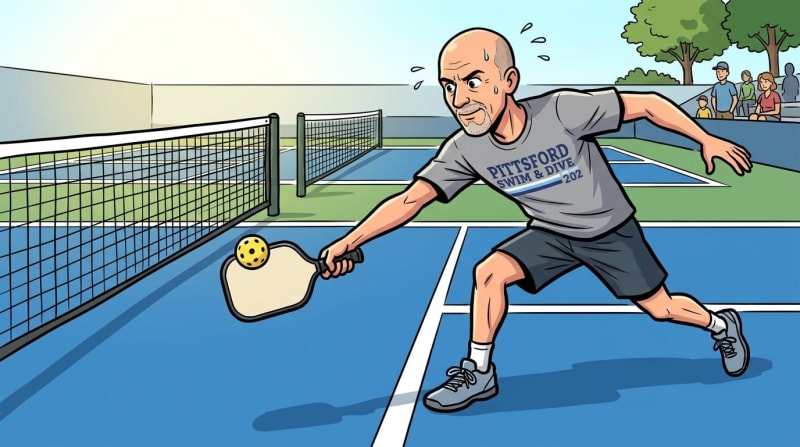
The tennis volley has a specific footwork pattern: step forward into the ball, rotate slightly, punch with a slice. That pattern produces foot faults constantly at the pickleball no-volley zone because the classic tennis volley mechanic — alternate foot forward, slice-punch — will cause you to step into the kitchen, which is illegal. Your tennis instincts will walk you right across the line without you noticing.
The replacement is the roll volley. Get your paddle under the ball, keep your chest parallel to the net — no rotation — load your outside leg, and accelerate low to high for topspin. It feels nothing like a tennis volley. That's the point.
The larger shift is understanding what the kitchen game actually is. Dinking is not a warm-up drill. It's the main event — a patient, lateral-shuffle exchange of soft shots designed to manufacture errors. The kitchen game runs on placement and position, not power winners. Shoulder rotation is the wrong move. Lateral shuffle steps are right.
The Reset Shot Is the Opposite of Everything Tennis Taught You

The Reset Shot Is the Opposite of Everything Tennis Taught You
This is the shot that decides 4.0 versus 4.0-plus. Most tennis converts who reach 4.0 have figured out the third shot drop and learned they need to move forward. What breaks them is the transition zone — the stretch of court between the baseline and the kitchen line — when someone drives a hard ball at their feet.
Tennis trained you to turn sideways, load up, and swing through the ball to add pace. The pickleball reset asks you to do the exact opposite: stay square, stay soft, and absorb the pace instead of adding to it. According to The Dink's coaching breakdown, soft grip pressure is essential — a tight grip transfers pace back into the ball, while a loose grip absorbs it. The reset isn't generated. It's received.
The transition zone is genuinely uncomfortable. Tennis players rush through it or bail backward. Players who break through 4.0 learn to split-step in the middle of the court, stay low, and hit clean resets from difficult positions. Your tennis background is one of the biggest advantages you can bring to a pickleball court — hand-eye coordination, court sense, footwork instincts all transfer. What doesn't transfer is the belief that pace wins points. Find open play this week, ask someone at the kitchen to drive balls at your feet from mid-court, and spend ten minutes doing nothing but resets.
Content ID: x3r5c72H5LCTLsLKmZ2bpVPC
See an error? Tell us.



Comments
Share with the Community