

What Is Minor League Pickleball? The Complete Guide to MiLP
The Short Version
- Minor League Pickleball (MiLP) is the largest amateur team pickleball league in the world, with over 250 sanctioned events in 2025 across 15 countries — and in 2026 it's running alongside live MLP pro events.
- Teams of four compete in DUPR-capped divisions based on combined ratings, so you're always playing against teams at your actual skill level — no sandbagging, no mismatches.
- A DreamBreaker tiebreaker — rotating singles to 21 — decides any match that splits 2–2, and it's unlike anything else in competitive pickleball.
- Win your division at a 2026 Regional Showdown and your team earns a Dream Ticket: automatic qualification to the MiLP National Championship with a $100,000 prize pool.
- Rochester players can get in with just a free DUPR account and three friends — the closest active MiLP events are in the New York and New Jersey corridor, within range for a serious team.
The League You Didn't Know You Could Play In

The League You Didn't Know You Could Play In
Most competitive pickleball players in Rochester know the local circuit — the Dinkers ladders, the DUPR sessions, the occasional USA Pickleball sanctioned event. You put in the work, your rating climbs, and at some point a natural question shows up: what's actually next?
The answer has a name. Minor League Pickleball — MiLP — is a structured, national amateur team competition owned and operated by DUPR, the sport's premier rating system. Founded in 2022, it has grown into the largest amateur team pickleball league in the world, with over 250 sanctioned events in 2025 alone across 15 countries on five continents. And in 2026, it just got significantly bigger — MiLP Regional Showdowns are now running alongside live Major League Pickleball pro events, putting amateur players in the same venues as the best in the sport.
Most Rochester players have never heard of it. That's about to change.
What MiLP Actually Is
What MiLP Actually Is
MiLP is not a traditional pickleball tournament. There are no singles draws, no round robins where you show up and play whoever. It is team-based, structured like a minor league sport — because that is exactly what it is modeled on.
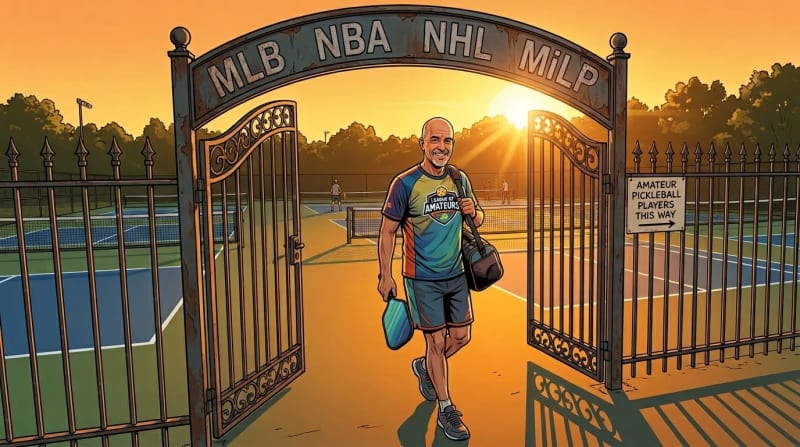
Every major professional league has a developmental feeder system. The Dink noted it plainly when MiLP launched: the MLB has three levels of minor leagues, the NBA has the G-League, the NHL has the AHL. Pickleball now has MiLP. The difference from those feeders is that MiLP is open to everyone — not just players on a pathway to the pros. It is the format that matters, not the skill level.
Teams are four players: two women and two men. Divisions are determined by the combined DUPR ratings of all four players — which means you are always competing against teams at your level, not against whoever showed up that day.
What does that look like in practice? A team of four players each averaging a 3.5 DUPR would have a combined rating of 14 — they would compete in the DUPR 14 division, against other teams of similarly rated players. No sandbagging. No mismatch. Just competitive team pickleball at your actual level.
How a Match Works

How a Match Works
A standard MiLP match consists of four games — one women's doubles, one men's doubles, and two mixed doubles — all played to 21 points with rally scoring. A freeze kicks in at 20: you must win the final point on your serve. The team that wins three of four games wins the match.
If teams split 2–2 after the four games, a DreamBreaker is played — a rotating singles tiebreaker where all four players cycle in, each playing points in sequence until one team reaches 21. It is the most intense way a pickleball match can end, and it is uniquely MiLP.
Every team is guaranteed at least three matches and six games in a round-robin pool. Top teams advance to a bracket playoff. The format is predictable, efficient, and — unlike most open tournaments — you know when you are going to play.
Regional Showdowns and the Dream Ticket
Regional Showdowns and the Dream Ticket
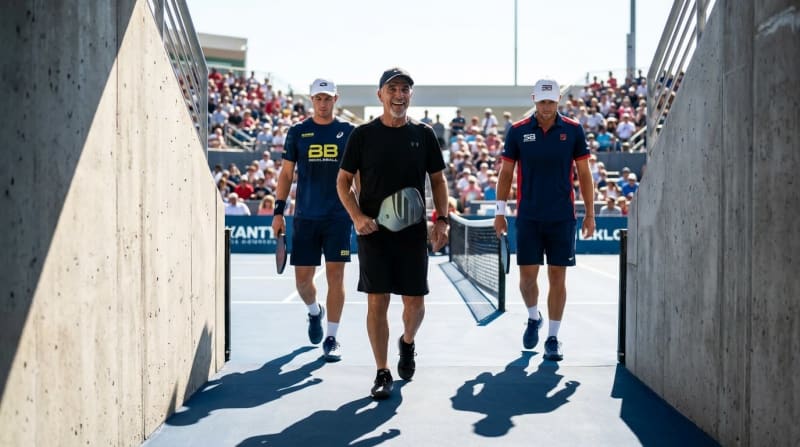
In 2026, MiLP made its biggest move yet. MLP and DUPR announced a formal partnership bringing MiLP Regional Showdowns to select Major League Pickleball pro events throughout the season. Amateur teams will now compete in the same venues, on the same weekend, as the best professional pickleball players in the world.
Regional Showdowns are official pathway events — they are not just local tournaments with a fancier name. Win your division at a Regional Showdown and your team earns a Dream Ticket: automatic qualification to the MiLP National Championship. Every match also contributes double points to the national leaderboard, so even teams that don't win a division are building toward nationals all season.
The 2026 MiLP National Championship — the highest level of amateur team competition in pickleball — is scheduled for February 2027, with a $100,000 prize pool open to all DUPR divisions. That means a DUPR 12 team has a real path to prize money alongside a DUPR 20 team, in the same event.
How Rochester Players Get In

How Rochester Players Get In
The barrier to entry is lower than most players assume. All you need to start is a free DUPR account. Once you have a rating established — a few sessions at Dinkers or sanctioned DUPR events is enough — you can form a team with three other players and register for any sanctioned MiLP event.
You do not need to be affiliated with an MLP franchise. You do not need a sponsor. You build your own four-person team, choose your division based on combined ratings, and show up. Some MLP teams do operate their own minor league rosters — the Brooklyn Pickleball Team, for instance, runs DUPR 12 through 20 rosters and competes as a named franchise — but independent teams compete under the same rules and in the same divisions.
The closest MiLP activity to Rochester right now is in the New York and New Jersey corridor — Brooklyn Pickleball Team runs a full 2026 MiLP schedule with events at venues like Hell's Kitchen PBC and Randall's Island. Regional Showdowns at MLP events in New York City this summer are within range for any Rochester team serious about making the trip.
What does it mean that there's a pathway from a Wednesday night ladder at Dinkers all the way to a national championship with $100,000 in prize money — open to your exact skill level? It means the ceiling just got a lot higher than most players around here realize. Whether you're chasing that or just want to experience team pickleball the way it was designed to be played, MiLP is worth knowing about. The next step is finding three people on your court who want to build something together.
Content ID: 1oKhZsCktm0WlW2ZwG116x82
See an error? Tell us.
Comments
Share with the Community