Drilling vs Open Play: How to Split Your Pickleball Practice Time
The Short Version
- Open play reinforces existing habits — players who log hundreds of hours without rating improvement are almost always practicing winning, not developing the mechanics that actually need work.
- Top pros flip the ratio entirely: roughly 70% drilling, 30% game play — the opposite of what most rec players do, and the reason the plateau is so common at the rec level.
- Three shots require deliberate drilling above all others: the third shot drop, the reset dink, and the forehand counter — all technically demanding enough that the game penalizes the attempt before the mechanics are reliable.
- The two-skill rule: drilling more than two techniques per session produces zero retention in any of them — depth beats breadth, every session.
- Even 15 minutes of intentional drilling before open play begins produces measurable results over four to six weeks, and framing it as a warm-up drops the social cost of asking a partner to near zero.
- DUPR is a lagging indicator — track execution rate in live points instead, and if your reset dink works four times in ten instead of one in ten, the improvement is real and the rating will catch up.
There is a specific kind of frustration that hits around 300 hours of pickleball. You are no longer a beginner. You know where to stand, you can sustain a dink rally, and you understand the basic strategy. But your DUPR rating hasn't moved in six months. Your third shot drop still floats. Your resets are inconsistent. You are playing more than ever and somehow improving more slowly than expected. This is the pickleball plateau — and the fix almost always comes down to the same question: are you getting your pickleball drilling vs open play ratio right? Almost nobody is.
Why Open Play Alone Stops Working
Why Open Play Alone Stops Working
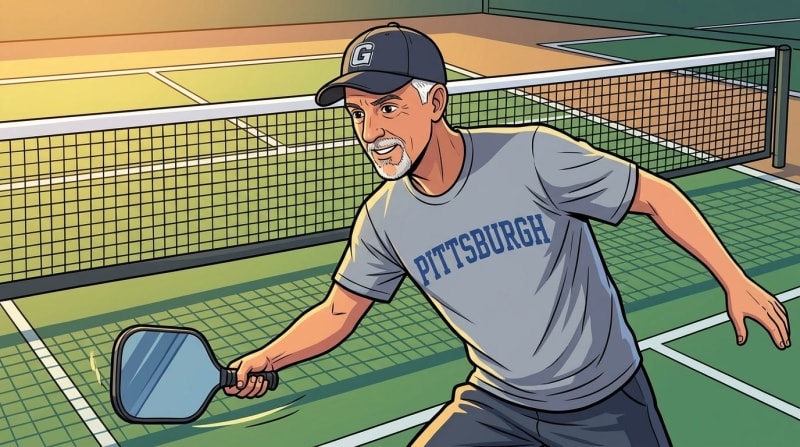
Open play has a structural flaw for anyone trying to improve: you will default to the shot that keeps the rally going, not the shot that challenges your weakest mechanics. That is rational game strategy. It is also the wrong environment for skill acquisition.
Consider what a typical open-play session looks like. You dink until someone pops up, someone attacks, someone resets or doesn't, and the point ends. In an hour, you might execute a third shot drop — well or badly — ten times. Those ten attempts are scattered across different situations, different partner paces, different score pressure. That is exposure, not repetition.
Sports science and coaching research draw a sharp line between these two things. Skill development requires isolated, feedback-rich repetition at the edge of competence — not generalized activity in the domain. A musician doesn't improve a difficult passage by playing the full piece repeatedly and hoping it improves. Pickleball mechanics work the same way, and the coaches who study this most seriously say so consistently.
Players commonly report logging 400 or more hours of open play without meaningful rating movement. The mechanics that need work don't get isolated in game play because the game punishes you for attempting shots you haven't yet automated. Playing to win in open play and practicing to improve are different goals that require different environments. Confusing the two is why most players plateau.
Here is how most rec players actually split their court time compared to players actively working to improve:
The 10/90 split is not a personal failure — it is the norm at most drop-in sessions. It is also why improvement stalls. The courts are already full of players who have been waiting for improvement that hasn't arrived. What if the environment — not the effort — is what needs to change?
What Top Pros Actually Do: The Drilling-to-Play Ratio
What Top Pros Actually Do: The Drilling-to-Play Ratio
The Dink, which covers professional pickleball more closely than any other publication in the sport, published a feature on a top pro's actual daily practice sequence in May 2026. The structure is instructive: before any game play begins, one or two specific skills are isolated for deliberate drilling. Those skills get hundreds of focused reps. Game play comes after — as a test of what was just drilled, not as the primary learning environment.
The 2025-2026 PPA Tour season's most dominant players — Anna Leigh Waters and Ben Johns — are the clearest examples of what structured training at scale produces. Their sustained dominance across multiple seasons is not solely natural talent. It is the product of systems that prioritize the weakest skill in the current development cycle, not the shots that are already strong. Anna Bright and Anna Leigh Waters' elite doubles defense, covered in a May 2026 PPA feature, is built on exactly the kinds of reset and counter skills that only deliberate drilling develops.
The mental model that separates pro training from rec training is simple: pros treat drilling as the job and game play as the test. Most rec players treat game play as both — which means they practice with tools they already have rather than building new ones.
Individual pro players vary in their exact split, and conditioning adds additional structure beyond what is shown here. But the directional gap is consistent across coaching accounts and player interviews. The flip is real, and it is dramatic.
The Three Shots Worth Drilling Most (and Why)
The Three Shots Worth Drilling Most (and Why)
Not all skills are equally hard to develop in open play. A flat drive gets practiced incidentally and exposure in game situations moves the needle. Other shots are technically demanding, high-pressure, and risky to attempt before you have automated them. Those are the ones that require drilling.
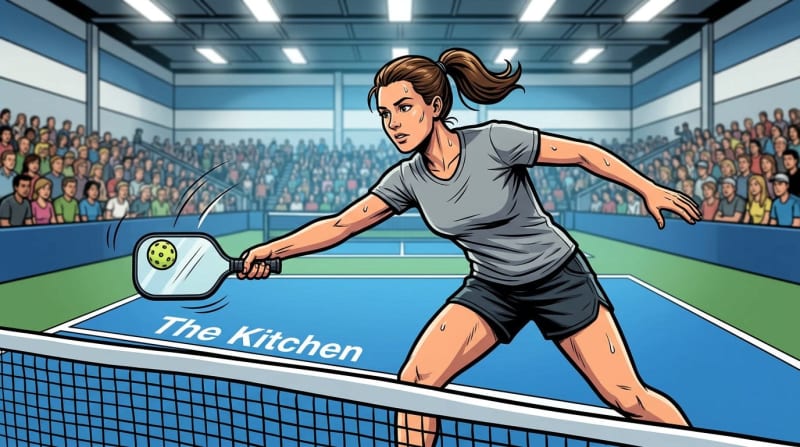
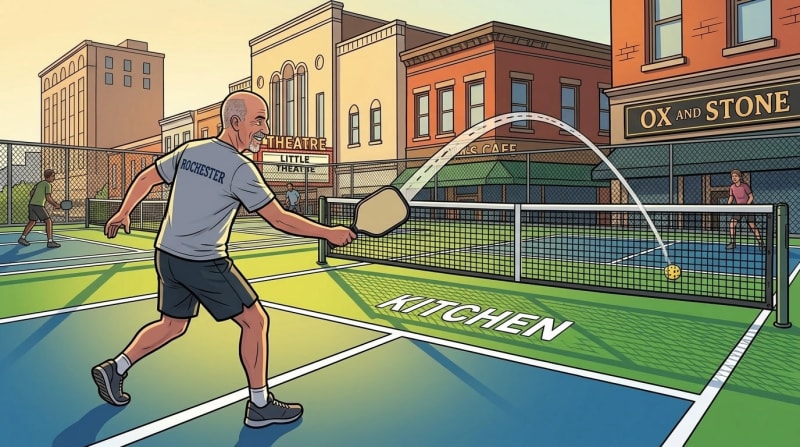
The third shot drop is the clearest example. Pickleball Kitchen and every advanced instruction resource in the sport identifies the third shot drop as the primary skill separating 3.5 from 4.0+ players. The shot requires a soft, arcing trajectory from the transition zone into the kitchen — under pace pressure, often while moving backward. Attempting it in a real point when the mechanics are not there is a liability. Drilling it in isolation, with immediate feedback on each rep, is the only reliable path to automation.
The reset dink is the second. The ability to take an attackable ball — a hard shot at your midsection or shoulder — and redirect it softly into the kitchen is the defensive foundation of upper-level play. According to Pickleball Kitchen's instructional research, decision-making under bounce-versus-volley pressure is a teachable, drillable skill — not instinct. You cannot develop the reset reliably in open play at the rec level because most opponents won't generate consistent attack pace, and when they do, the point ends before you get useful feedback. A drilling partner feeding attack balls at the same height and pace gives you what no game can: the chance to fail in a controlled environment, adjust, and repeat.
The forehand counter is the third. The Dink identified the forehand counter as "the number one skill for good hands" in a May 2026 feature on elite play. The shot requires absorbing pace and redirecting it with precision — mechanics that demand the tight, controlled repetition of a partner feed, not the unpredictable pace of open play.
Which one of these are you currently hoping will improve through more time on the court? That hope is pointing directly at your next drilling focus.
These three shots share a common characteristic: the game punishes the attempt before the mechanics are reliable. Drilling removes the penalty and gives you the reps.
A Practical Drilling Framework for Rec Players
A Practical Drilling Framework for Rec Players
The framework itself is not complicated. What makes it feel complicated is the social structure of rec pickleball, which defaults entirely to open play. Strip that away and three rules cover almost everything.
The 60/40 minimum. For any player actively trying to improve, 60% of court time should be drilling and 40% should be game play. For a player in a genuine plateau — two or more years without rating movement — a temporary 80/20 drilling-heavy split is the fastest path out. Once the plateau breaks, return to 60/40.
The two-skill rule. Pick one or two skills per session. Spreading across five techniques in a single session produces zero retention in any of them. If you are working on the third shot drop and the reset dink, work those for the full drilling block. Next session, same or next skills. Depth beats breadth, every time.
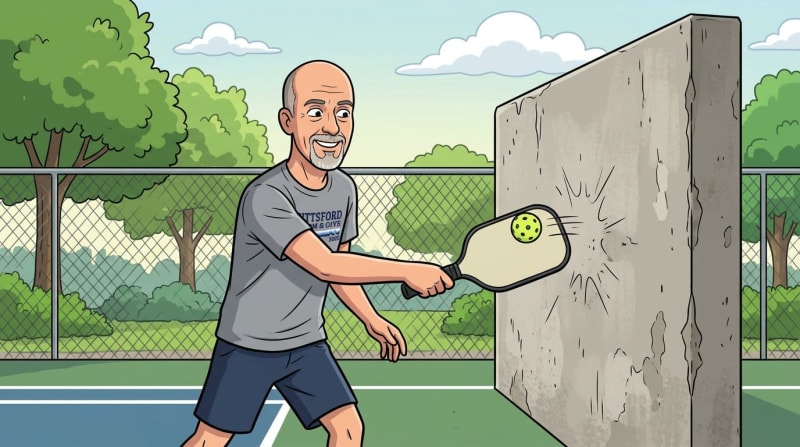
Solo drilling is real. You do not need a partner. A wall or rebounder for dink mechanics, shadow swings for third shot drop arc, a Pickleball Tutor or similar ball machine for reset practice — these solo reps are more valuable for specific mechanics than hours of open play. The wall at your local park costs nothing.
There is also an injury case for drilling. According to PickleballFire, tennis elbow in pickleball is frequently caused by poor stroke mechanics — the kind of ingrained bad habits that open play reinforces and drilling corrects. Overuse from excessive daily open play is a primary driver of chronic pickleball injuries. Substituting some open play sessions with drilling reduces repetitive high-intensity load while still accumulating skill reps. Improving your game and protecting your body point in the same direction.
Any shift toward more drilling is a shift toward improvement. A 50/50 session is vastly better than 10/90.
How to Bring Drilling to Your Local Court Culture
How to Bring Drilling to Your Local Court Culture
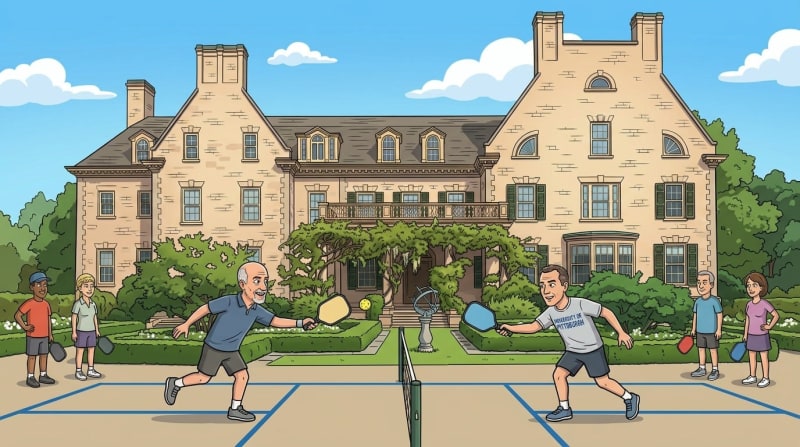
The social barrier is real. Walking into a drop-in session and asking someone to drill cross-court dinks for 20 minutes before the games start feels awkward the first time. Here is what usually happens when you try: most players say yes. Some are actively relieved — they want to improve and didn't know how to ask either.
The rec pickleball community is unusually welcoming, and that welcome extends to players who want to work at something. "Hey — I'm trying to improve my dinking. Any chance you'd want to warm up with some cross-court dinks before we start?" is a question that rarely gets turned down. The gift this community has always offered — belonging before competence — applies to drilling too. You don't have to be good at it to ask.
Even 15 minutes of intentional cross-court dinking before open play begins produces measurable results over four to six weeks. Framed as a warm-up rather than a serious drilling session, the social cost drops to near zero.
The more powerful version is a small drilling group — two to four players with the shared explicit goal of improvement who commit to drilling time before or alongside open play. What happens in these groups is not just skill development. It is accountability and community. Players improve faster because they are showing up for each other, not just for themselves. That is what the sport's belonging looks like at its best: not just friendships that form while waiting for a game, but friendships built around a shared commitment to getting better together.
What would it mean for your local court if three or four players decided to show up early and work — every week?
How to Know It's Working: Measuring Real Improvement
How to Know It's Working: Measuring Real Improvement
DUPR is the best rating system the sport has and it is a lagging indicator. Your rating moves after enough game-play samples accumulate — which means it can take weeks or months to reflect a skill you built last Tuesday. Do not wait for DUPR to validate your drilling. Watch the leading indicators instead.
The most useful one is execution rate in live points. If you drilled the third shot drop for six sessions and now execute it correctly four times in ten real-game attempts — up from one or two — that is meaningful, measurable improvement. The partnership between DUPR and Pickleball Central, the sport's leading measurement and retail network, exists precisely because this community cares about tracking improvement. Build your own version at the shot level, not just the rating level.
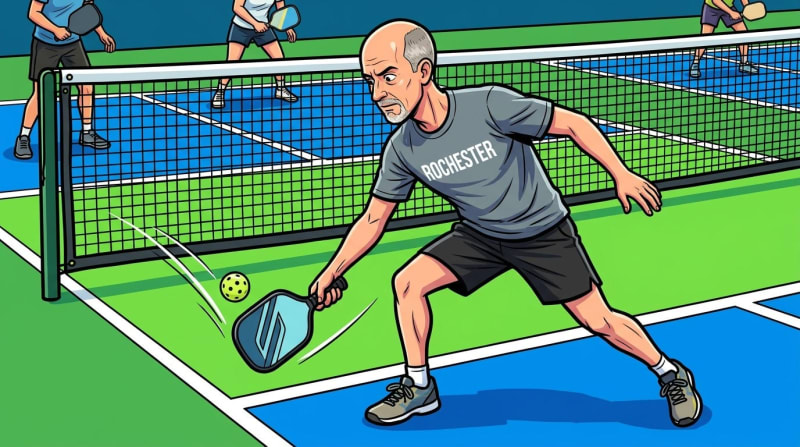
For the reset dink specifically: count how many attackable balls you successfully redirect softly into the kitchen per open-play session. That number should improve within six to eight sessions of focused drilling. If it doesn't, the drill itself needs examination — either it is not isolating the right mechanic, or the feedback loop is missing.
This is a model, not a guarantee. Every player's curve is different. But the shape — slow early, steeper as the motor pattern forms — is consistent with how skill acquisition works across sports. The early sessions feel like nothing is changing. Then it clicks.
When a drilled skill executes automatically under pressure in a live game, it has graduated. Reduce drilling frequency for that skill, introduce the next weakness, and run the cycle again. This is not a one-time fix. It is a practice system — and players who build it don't just break their plateau. They stop building new ones.
What is the shot you have been hoping will improve through more open play? That's exactly where your next drilling session starts.
Content ID: IMwo7C4dVwYxzTCIHUELa434
See an error? Tell us.
Comments
Share with the Community