
The DUPR Reset Is Done: What 400,000 Matches Revealed About Where You Actually Stand
The Short Version
- 400,000 matches were submitted before the May 31 deadline — more participation than DUPR anticipated, which is why they extended the window by two weeks.
- 57% of participants received higher ratings after the reset, but 91% of those gains were 0.3 points or less — the system was lagging slightly, not dramatically off.
- The 8% who gained between 0.3 and 0.5 points should check tournament bracket cutoffs before their next registration — that range is large enough to move you into a harder division.
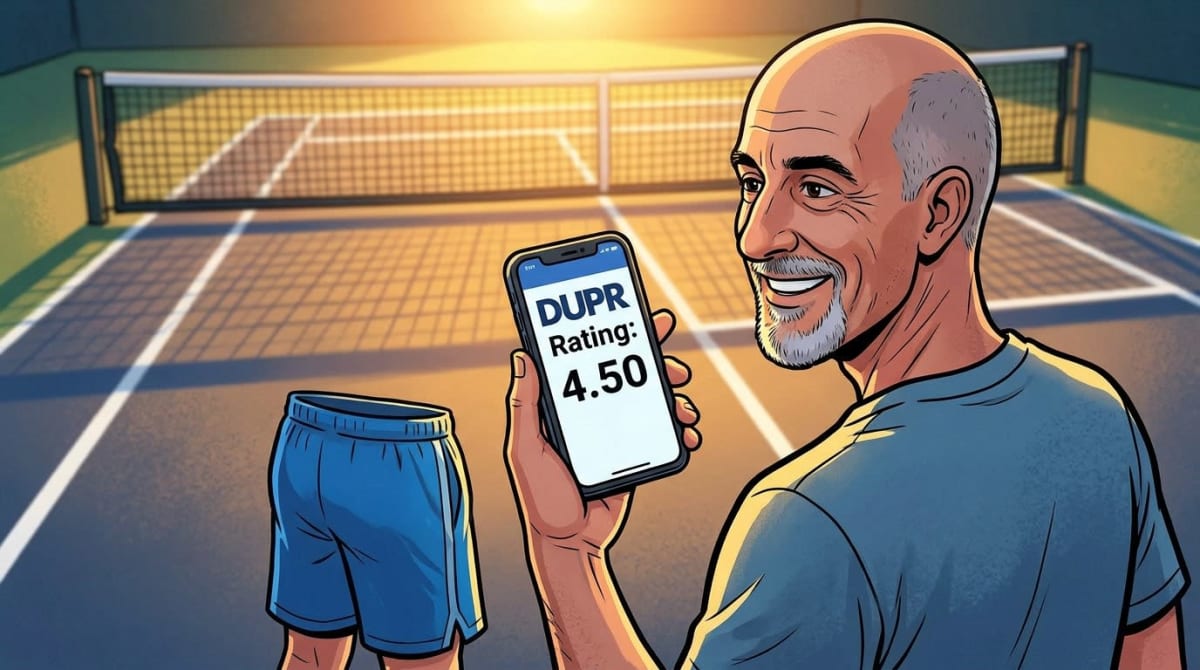
- Your updated DUPR rating is live in the mobile app right now — log in, check your profile, and compare your current number against your career high.
- Rochester-area tournaments including the Flower City Open and regional PPA Challengers use DUPR for seeding, so an accurate rating determines where you compete, not just how you feel about your game.
The DUPR reset results 2026 are official. More than 400,000 matches were submitted before the May 31 deadline, and the number waiting in your app right now is the most accurate reflection of where your game actually stands. This wasn't a minor system update — it was the largest recalibration in DUPR's history, driven by a community that decided, en masse, that accurate ratings matter.
The short version: most players who participated saw modest improvements. A meaningful few saw changes large enough to shift their tournament brackets. And the whole exercise surfaced something the pickleball community has quietly been waiting for — a chance for your rating to finally catch up to your actual game.
What Was the DUPR Reset — and Why Did DUPR Launch It?

What Was the DUPR Reset — and Why Did DUPR Launch It?
Rating systems have a timing problem. DUPR's algorithm accounts for all historical matches, which means a rough stretch from a year ago still lives in your number today. For players who've genuinely improved — working on the third-shot drop, tightening the dink game, finally making sense of stacking — the gap between their current play and their DUPR rating can feel like it's running behind reality.
According to DUPR's program documentation, the reset launched in March 2026 specifically to address this lag. Players could submit recent matches for inclusion in the recalibration, with the system placing extra weight on current performance rather than the full historical arc. The defining design principle: submitting could only raise your rating or leave it unchanged. There was no downside to participating.
The deadline was originally set before May 31. DUPR extended it by two weeks due to higher-than-expected participation. When a system offers players a chance to be seen more accurately, and hundreds of thousands of people show up for it, that tells you something real about what the community values.
The early results tell that story in numbers. Here is where players landed:
What the 400,000 Match Numbers Actually Show

What the 400,000 Match Numbers Actually Show
According to The Dink's analysis of the reset results, 57% of participants received higher ratings. The other 43% saw their numbers stay the same or edge lower. In a program designed to benefit participants, that 43% isn't a failure — it means the matches those players submitted were consistent with their existing ratings. The system agreed with what was already on record.
The size of the changes matters as much as the direction. Of everyone who received an increase, 91% gained 0.3 points or less. Here is how the magnitude distribution looks among players who saw rating gains:
Most of the movement was refinement, not revolution. A 0.1–0.3 point correction says your recent matches are a bit stronger than your historical record suggested. A 0.3–0.5 point correction says something more meaningful: your current game has outpaced your rating by enough to matter in competition.
That 8% who gained between 0.3 and 0.5 points — those are the players with something specific to act on. Their reset isn't cosmetic. Depending on where they started, it could change which tournaments they qualify for and which brackets they land in.
"DUPR designed the reset to provide players with a risk-free opportunity to record recent DUPR matches."
— DUPR, via The Dink
What this data captures, underneath the percentages, is a community that was playing better than its ratings showed. The reset didn't create that improvement — it just finally reflected it.
How to Find Your New DUPR Rating Right Now

How to Find Your New DUPR Rating Right Now
Your updated rating is live in the DUPR mobile app, available on iOS and Android. Log in, navigate to your profile, and your current rating is displayed at the top. If you submitted matches during the reset window, that number reflects the recalibration.
A few things worth checking while you're there:
Your career high is a separate data point. DUPR tracks both your current rating and the highest rating you've ever held. If the reset pushed you above your previous career high, that updates too. If the reset didn't move you, the career high stays unchanged — still useful information about where your game has been.
Your match history shows whether submitted matches were processed. Check the history log in your profile. If matches logged during the reset window appear there, they were counted in the recalibration.
If you didn't submit anything, your existing rating was unaffected. The reset was opt-in. Standard match logging through DUPR continues as always — the reset window is closed, but building your rating through regular play is always available.
One note: the app is the authoritative source. Web-based DUPR profiles may show different information or update on a slight delay. If you want the current number, check the app.
What Your Rating Change Means for Where You Play
What Your Rating Change Means for Where You Play
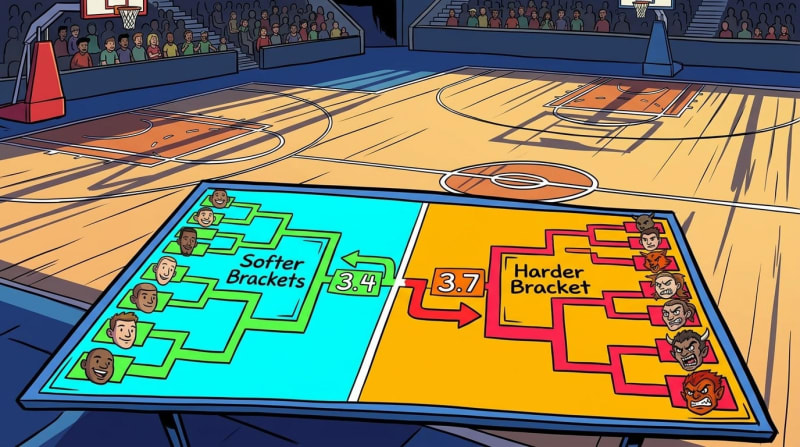
A 0.3 or 0.5 point shift sounds like a rounding error. In practice, it can land you in a different division. Here is how the DUPR rating scale maps to recognizable skill tiers:
If your reset moved you from 3.4 to 3.7, you haven't just gained a decimal — you've crossed from solid recreational territory into the strong rec tier. Tournament brackets that use 3.5 as a cutoff will route you into harder competition. That's what a 0.3 point gain means in real terms.
For players whose ratings held steady, the story is still worth reading. Better-matched games follow from accurate ratings across the whole community. When everyone's number reflects their current level — not a peak from two years ago or a soft stretch from last fall — open play groups, ladder leagues, and mixed events run better for everyone involved.
DUPR serves as the standard rating system for seeding across PPA Challenger amateur brackets nationwide. That number in your profile is the infrastructure underlying how competitive pickleball organizes itself. Accurate ratings don't just serve individual players — they make the whole system work.
Should Rochester Players Care About This?

Should Rochester Players Care About This?
If you play in any organized events in the Rochester area, the answer is yes.
The Flower City Open, Fairport Pickleball Club competitive events, and regional PPA Challenger brackets all use DUPR for seeding and bracket eligibility. Here is how standard DUPR tournament bracket cutoffs work in practice:
If your reset number moved up significantly — especially if it crossed a threshold like 3.5 or 4.0 — check tournament registration requirements before your next event. You may find yourself eligible for a different division than you registered for last season.
If your rating held flat after the reset, that's clean information. Your submitted matches confirmed what your historical number was already saying: you're playing at that level right now. No recalibration needed, because no meaningful gap existed.
And if you're not yet in DUPR — or if you've been logging matches sporadically — every organized event in this region is moving toward DUPR as the standard for rated play. Getting into the system, playing rated matches at Fairport, East Rochester, or the indoor courts running leagues, and building a consistent match history is the foundation for every competitive opportunity that matters locally.
What would change for you if your rating finally caught up to your actual game? What would it open up — which tournaments, which brackets, which playing partners — that hasn't been accessible at your current number? Those aren't rhetorical questions. They're the reason 400,000 people showed up for this reset.
Content ID: 5LQF5Ag4nNHweYQoB1BSLnnQ
See an error? Tell us.



Comments
Share with the Community