
Topspin Is Winning Points at Every Level of Pickleball — Here Is How to Stop It
The Short Version
- At 1,400+ RPM, topspin kicks higher and wider off the court than a flat drive at the same pace — which is why standard timing breaks down after the bounce.
- Taking the ball on the rise with a compact backswing is the position-preserving counter: it intercepts the ball before the spin climbs it to shoulder height.
- Soft hands beat topspin by killing the pace the rotation feeds on — a relaxed grip turns an attacking ball into a neutral reset.
- Backing off the baseline is a survival option, not a strategy — it trades court position and recovery time for a better contact zone.
- The Fridge/Toaster drill builds the early read every counter depends on: identifying where the ball will land before it bounces.
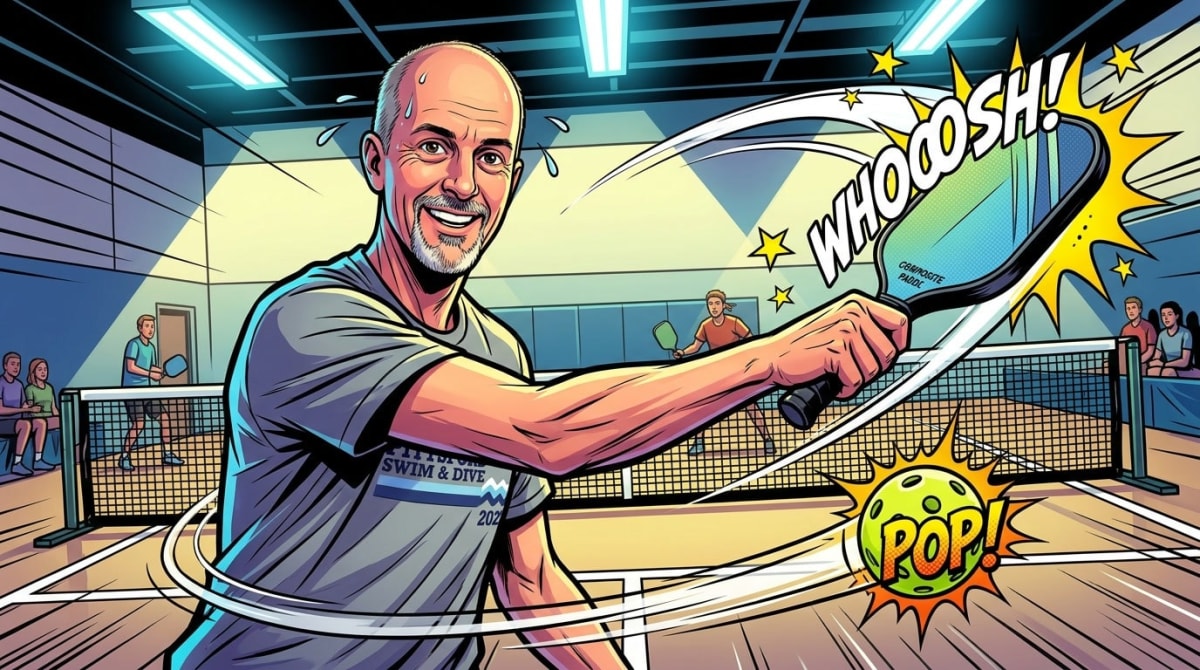
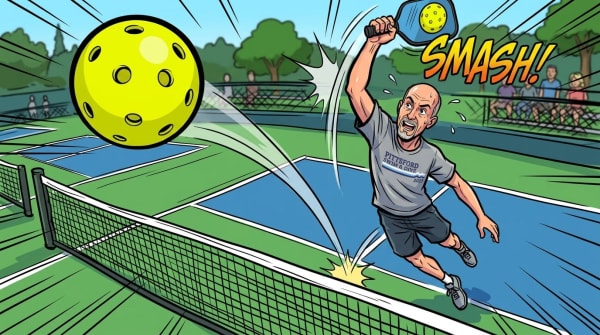
heavy topspin used to be an advanced skill. Now it shows up at every level of recreational play, and the old advice — get in position, track the ball, swing through — breaks down fast. Learning how to return topspin in pickleball means understanding what happens after the bounce, because that is where the damage actually occurs.
Why Topspin Is So Hard to Read Off the Bounce
Why Topspin Is So Hard to Read Off the Bounce
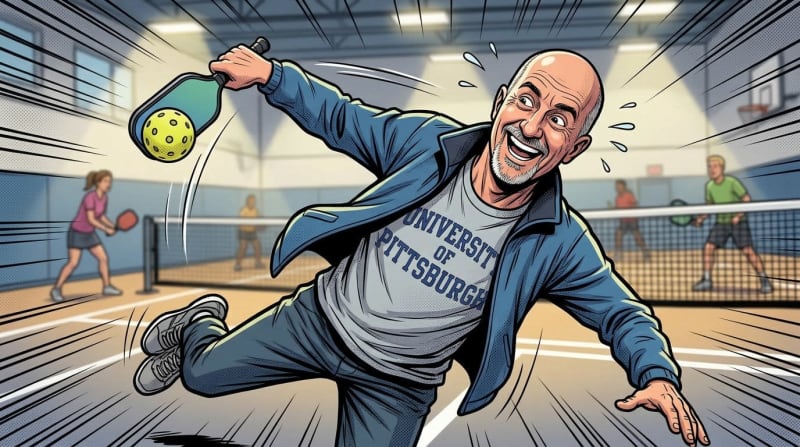
The physics are worth a moment. As spin rate climbs toward 1,400 RPM and beyond, the ball's flight distance shortens and the post-bounce angle steepens — according to The Dink, the ball kicks higher and wider off the surface than a flat drive hit at the same pace. That is why players trained on flat drives keep catching the ball at shoulder height or off their back foot. The contact point shifts on nearly every ball. You are not chasing the same shot twice.
The failure mode is waiting. Players set up behind the baseline, watch the ball bounce, and swing upward at a contact point that has already moved past the ideal strike zone. The spin has done its work before the paddle arrives.
Four Counter-Techniques That Work at Every Level
Four Counter-Techniques That Work at Every Level
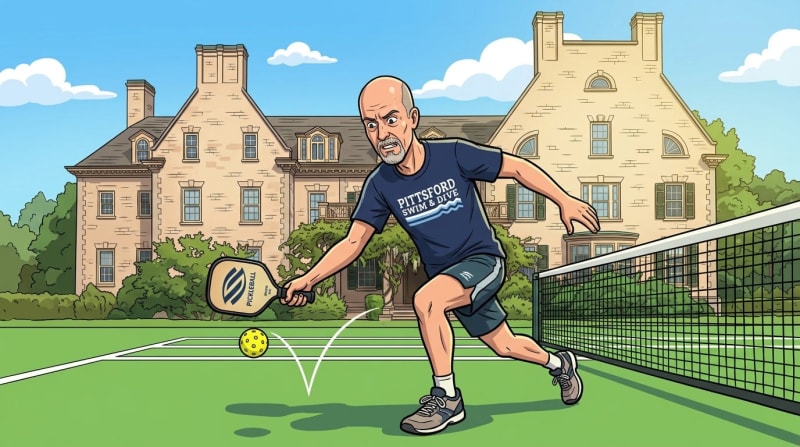
Take the ball on the rise. This is the position-preserving counter. Move toward the ball and make contact with a compact backswing — not a full loop — and a forward step into the court. According to The Dink, a shortened backswing plus a forward step keeps your kinetic chain intact and intercepts the ball before the spin has time to push it to shoulder height.
Back off the baseline. Moving back gives the ball room to rise and fall to waist height, a more manageable contact zone. The Dink is direct: this is a survival option, not a strategy. You surrender court position and give your opponent recovery time. Use it when you are late or off balance, not as a default response.
Block or reset with soft hands. Loosen your grip and absorb the pace rather than matching it. As The Dink puts it:
"Kill the speed and the rotation has nothing left to feed on, which is how you become unattackable."
A soft block into the kitchen turns the rally neutral. The mistake most players make is tensing up at heavy spin — which keeps the opponent in control.
Open your stance on wide balls. When the ball pulls you left or right with no time to step in, open your hips first and let your shoulders follow. According to The Dink, hip and trunk rotation in that sequence generates a controlled return without requiring a linear weight transfer you cannot complete on a wide, spinning ball.
Two Drills to Build the Feel Between Sessions
Two Drills to Build the Feel Between Sessions
The four counters above are decision points. Knowing them is not the same as having the muscle memory to select the right one when the ball is coming fast with heavy rotation. Two drills close that gap.
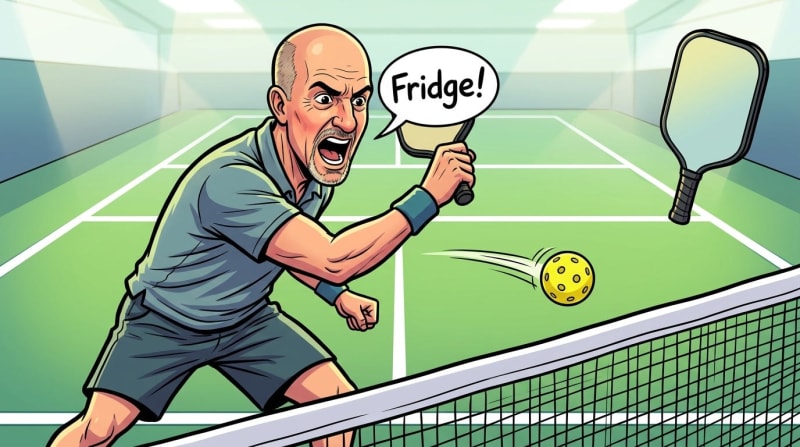
Fridge and Toaster. The primary decision when handling topspin is where the ball is going to land relative to your contact zone. The Fridge zone is shoulder height; the Toaster zone is waist height. Drill with a partner feeding heavy topspin and call out "fridge" or "toaster" as the ball crosses the net. That read — before the bounce — is what lets you pick the correct counter in time.
Wall work. Find a smooth wall and rally at medium pace. The natural variation in rebound angle simulates the height changes a topspin feed produces. The goal is not pace — it is reading the ball early and adjusting your contact point. Ten minutes of focused wall work builds the habits that live games move too fast to teach.
open play is where the counters get tested for real. Every club has a topspin player. Pick one counter for your next session, run it exclusively against that player, and see what holds.
Content ID: HoClUEuy1YeAGx86vFKKXSny
See an error? Tell us.
Comments
Share with the Community