
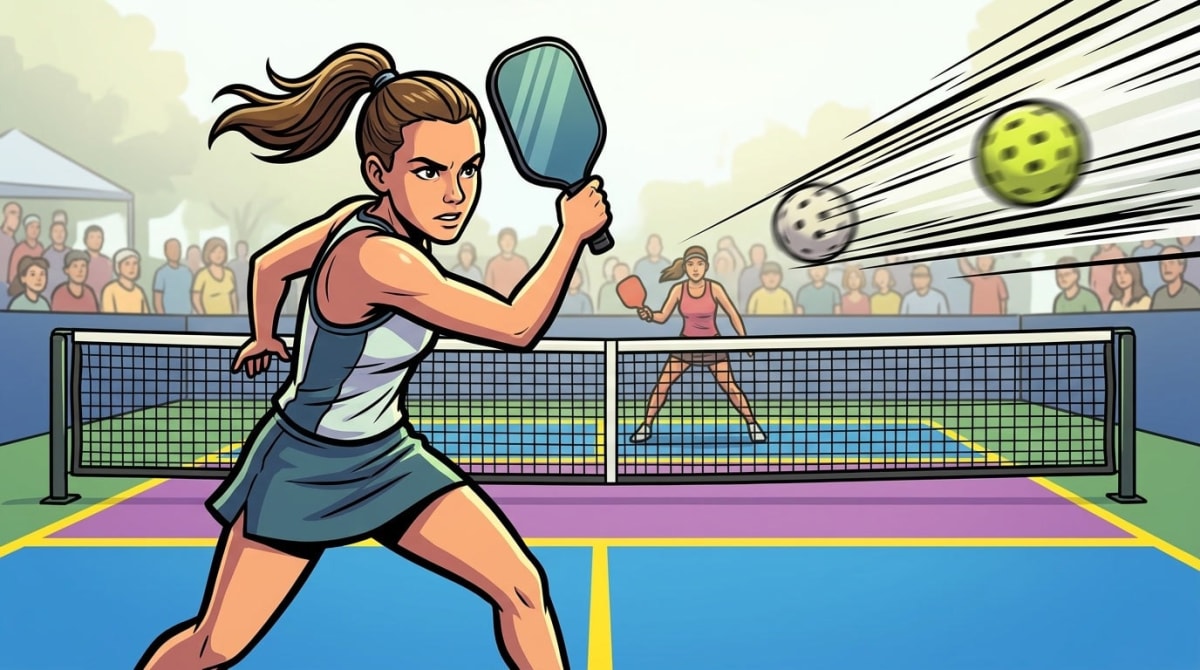
How to Beat Bangers in Pickleball: 5 Techniques From Pro Ava Ignatowich
The Short Version
- The key to beating bangers in pickleball is slowing the game down rather than matching their pace — pro Ava Ignatowich's five-technique framework starts there.
- Absorbing pace with a soft, open-faced kitchen reset is the single highest-impact skill to develop against power players — it requires grip relaxation, not strength.
- Bangers generate unforced errors at substantially higher rates as rallies extend past 7-8 shots, which means patience is a genuine and underused competitive advantage.
- Stepping one to two feet back from the kitchen line increases reaction time by roughly 30% against hard drives — a small positional adjustment with outsized impact.
- Sharp crosscourt angles exploit bangers' discomfort outside linear drives; combine width with a kitchen drop on the next shot to break their setup rhythm completely.
The ball comes off their paddle like a freight train. You're at the kitchen line, they've stationed themselves back at the baseline, and before your brain can issue the command to move, the point is over — the drive sailed past you or your panicked block floated up as an invitation. If you've played recreational pickleball for any stretch of time, you know this player intimately. The banger.
The instinct — nearly universal — is to try to match their pace. Wind up, hit harder, fight fire with fire. It almost never works. What does work, according to pro player Ava Ignatowich, one of the sharpest tactical minds competing on the PPA Tour and a prominent voice in DUPR's coaching community, is five specific techniques that change the game being played. Knowing how to beat bangers in pickleball has nothing to do with raw power. It has everything to do with understanding what makes a banger uncomfortable — and then living there.
What Is a "Banger" and Why Are They So Frustrating?
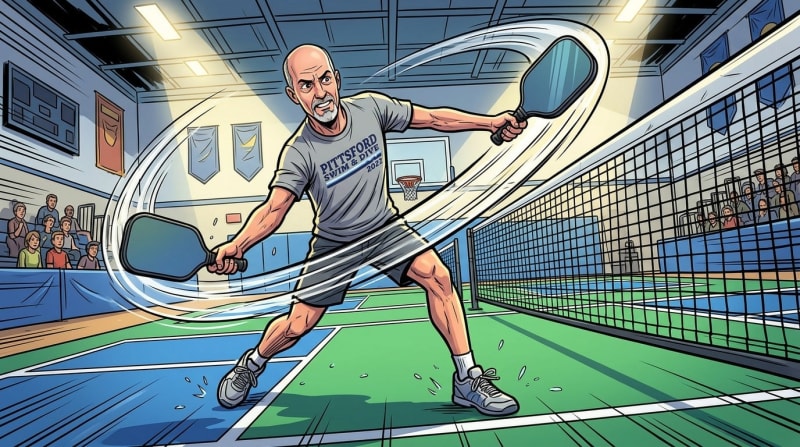
What Is a "Banger" and Why Are They So Frustrating?
The defining characteristic of a banger isn't just hitting hard. It's refusing to engage in a soft game at all. Bangers drive from every position — third shot drive instead of drop, full swing from the transition zone, rocket from behind the kitchen line. They've built an entire game plan around pace, and at recreational levels, that plan works often enough to be genuinely frustrating.
The reason bangers succeed against recreational players is worth naming clearly: most rec players haven't drilled resets under pace. The slow, patient kitchen game takes months of deliberate practice to develop. Bangers skip that skill curve entirely and discover that raw power beats an underdeveloped soft game every single time. They're not cheating. They're exploiting a real gap.
Coaching analysis of recreational play patterns shows a consistent shot selection imbalance for power-heavy players:
That 72% is your leverage. Nearly three-quarters of their shots are trying to do one thing. Make that one thing stop working and you've changed the match entirely.
The most important mindset shift: you don't need to out-hit a banger. You need to play a game they haven't prepared for. They've practiced driving against hard returns. They have not practiced driving against soft, angled, kitchen-bound resets. That distinction is everything.
Technique 1: The Reset — Turning Their Power Into Your Soft Game
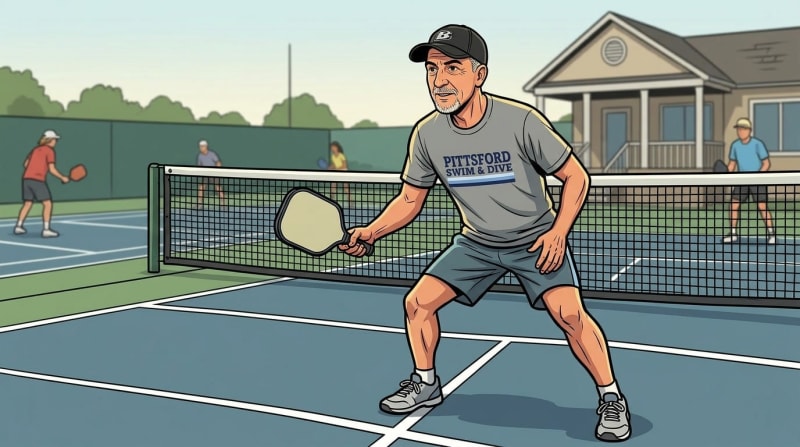
Technique 1: The Reset — Turning Their Power Into Your Soft Game
The reset is the foundational skill for beating bangers in pickleball — and it's the skill most recreational players haven't drilled under live pace. The goal is not to block the ball back hard. It's to absorb pace and redirect the ball so it lands softly in the kitchen, ideally cross-court where it's hardest to attack.
The mechanics are counterintuitive. When a hard drive comes at you, every instinct says tighten your grip and punch back. Do the opposite. Loosen your grip slightly, keep the paddle face slightly open, and think about the ball landing, not about hitting it back with intention. You're not generating power — you're redirecting theirs.
Ignatowich's coaching framework, featured on DUPR, places slowing the game down at the strategic core of every technique on this list. Bangers lose their timing loop when the ball arrives slow and low. They've calibrated their shot around a hard, high return; when that return doesn't come, their rhythm breaks. Pickleball coaching data consistently shows that players who prioritize kitchen-bound resets significantly reduce their opponents' attack opportunities compared to players who try to match pace:
Paddle position is the difference. Elbow slightly bent, paddle face forward and in front of your body — not beside your hip. If it's at your hip when the drive arrives, you have no time. If it's forward and ready, you have a real chance. Stay balanced; don't lunge.
What would it feel like to face a hard banger drive and not be afraid of it?
Technique 2: Attack Their Feet (Not Their Body)
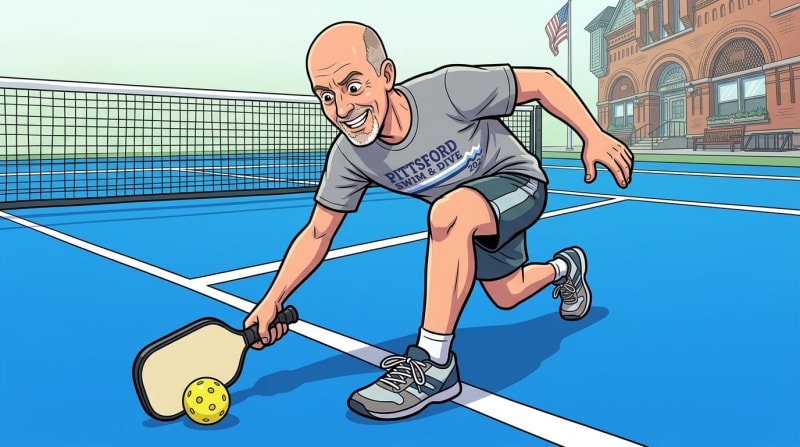
Technique 2: Attack Their Feet (Not Their Body)
Bangers typically set up a step or two behind the kitchen line. The extra distance gives them swing room — and it gives you a specific, highly effective target.
Aim at their feet. A hard shot at the torso can be muscled through; a hard, low shot angling into the shoelaces forces a fundamentally different movement. They have to reach down, drastically shorten their swing, and the result is almost always a pop-up — a ball floating high enough that you can attack with intention. The shot doesn't need overwhelming pace; it needs low placement.
Ignatowich's specific coaching point, shared via DUPR's performance features, is to identify directional preference early in the match. Does your opponent favor the forehand drive or the backhand? Most bangers have one dominant drive — push them hard to the weaker side. If they're a right-handed player who loves the forehand, pull them sharp to the backhand corner, force them into an uncomfortable contact point, and attack whatever floats back.
This technique belongs to every recreational player. Accurate placement beats pace every time it's available. Aiming a ball at someone's feet is a skill you can build in any drilling session, at any skill level.
Technique 3: Use the Sideline Angle to Pull Them Wide
Technique 3: Use the Sideline Angle to Pull Them Wide
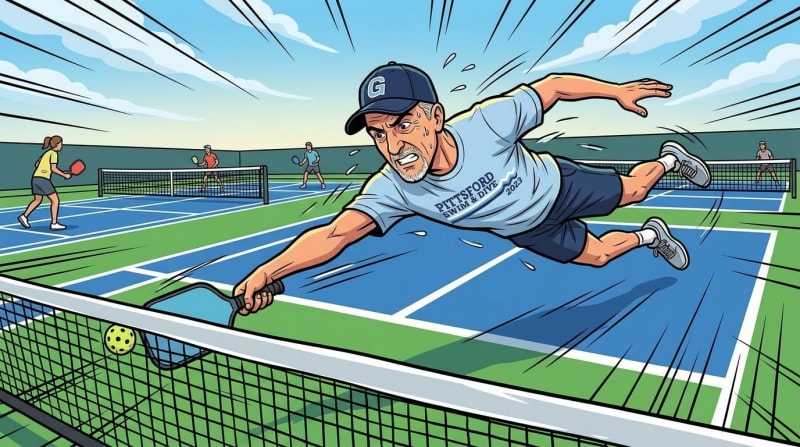
Bangers are built for linear power — down the line, through the middle. Sharp crosscourt angles are outside their comfort zone, and that discomfort is yours to exploit.
A sharp angle to the sideline does two things simultaneously: it stretches the banger laterally off court, and it opens the middle for your next shot. When they have to sprint wide to retrieve an acute angle, any return from out wide will either float (giving you an overhead opportunity) or travel back through the open middle — which you've already moved to cover.
Coaching analysis comparing power players to balanced players shows a consistent and significant difference in shot direction preferences:
The combination Ignatowich recommends: go wide with pace on the first shot to force the lateral sprint, then drop the next ball short and low into the kitchen. They've just sprinted wide — now they have to come forward. Two consecutive movements that disrupt any banger's setup rhythm completely.
This is accessible at 3.0. You don't need tour-level pace. You need consistent placement within 18-24 inches of the sideline. That's a drilling target, not an athletic one.
Technique 4: Patience — Let Them Miss
Technique 4: Patience — Let Them Miss
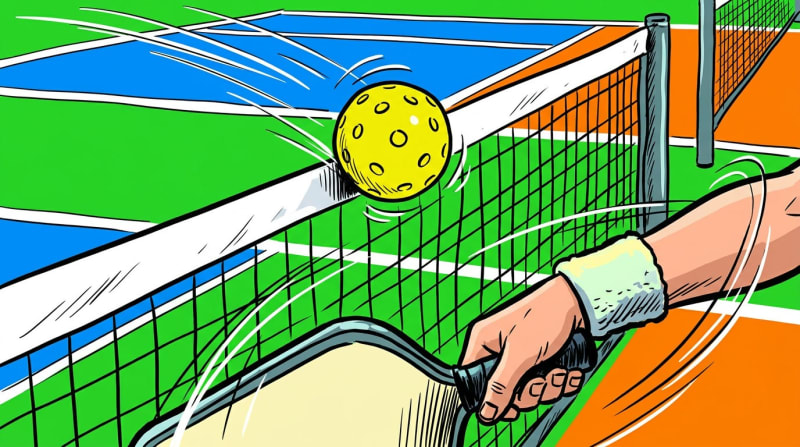
This is the least athletic and most effective technique on the list: keep the ball in play and wait.
Bangers generate unforced errors at a higher rate than finesse players, and the gap widens as rallies extend. Hard drives carry inherently higher miss rates than controlled placements — the math isn't complicated. Pickleball coaching data across recreational and club levels consistently shows that power-heavy players accumulate errors at substantially higher rates as rallies push past the seventh or eighth shot:
Your job in a patience rally is simple: clear the net with margin, keep the ball in play, and don't go for winners before the opportunity is undeniable. Let them drive into the tape. It happens far more than bangers would like to admit — and it happens even faster when they're frustrated.
The mental challenge here is real. You need to be genuinely okay with a twelve-shot rally that ends in their error rather than your winner on shot five. Practice this intentionally. In drilling, set a minimum shot count before you're allowed to attack. Make yourself earn it.
What does it mean to play a game where waiting is the most powerful move on the court?
Technique 5: Change Your Court Position
Technique 5: Change Your Court Position
Kitchen line dominance is foundational pickleball. The player who controls the kitchen controls the point — that's not just received wisdom, it's borne out at every level of the game. But against a banger who is fully committed to driving, rigid insistence on the kitchen line turns their power into a near-unbeatable weapon.
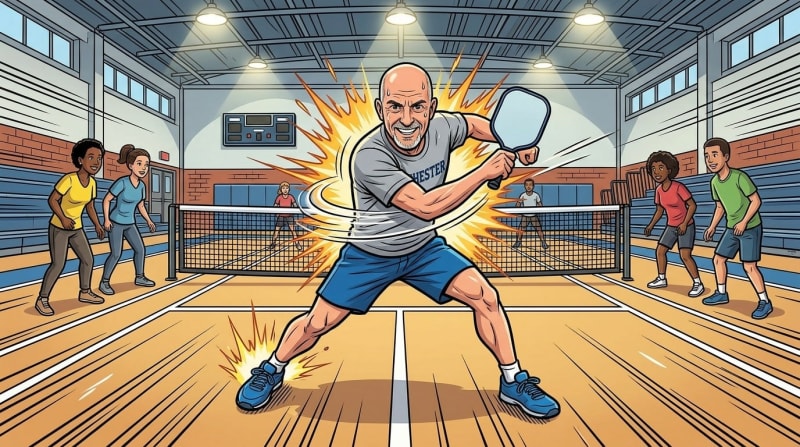
Ignatowich's fifth technique is a situational positional adjustment: step back one or two feet when you see the banger winding up. That small move matters more than it appears. A ball traveling 55 mph covers the approximately 20 feet from a baseline banger to your kitchen line in roughly 0.25 seconds. Two feet of added distance increases that to approximately 0.33 seconds — a 30% gain in reaction time that is often the difference between a controlled reset and a panicked swat.
The trade-off is real. You're giving up some kitchen control and making your next dinking position slightly less ideal. This is not a permanent stance — it's a read-and-react adjustment. Step back when they're loading up, complete the reset, and immediately step forward again to reclaim the kitchen line before their next shot arrives.
The recovery forward is as critical as the step back. If you reset soft into the kitchen and then remain back, you're handing them the kitchen advantage you just neutralized. Reset, step forward, reclaim position. That full pattern — step back, absorb, recover — is a drilling rep you can run fifty times in a single session with any practice partner.
Beating Bangers: The Game Underneath the Game
Beating Bangers: The Game Underneath the Game
Every one of these five techniques asks the same thing of you: play with more intelligence and more patience than power alone requires.
Bangers aren't the adversary. Many of them built their game around pace because it worked early in their pickleball development and no one showed them another path. The interesting ones — the ones genuinely growing as players — will start adjusting when they notice your resets are neutralizing their drives. That's when pickleball gets genuinely absorbing: two players adapting to each other in real time, inside a single match.
The reset, the foot attack, the angle, the patience, the step back — these aren't defensive concessions. They're gifts that belong to every player, regardless of athleticism, age, or rating. A 3.5 player who can reset a blistering drive softly into the kitchen is doing something that requires real practice and real discipline to develop. It doesn't require power. It requires reps and the willingness to play a slower game until the slower game wins.
"The player who controls the pace controls the point — and pace control belongs just as much to the person slowing the ball down as to the person driving it hard."
You already have everything you need to start. What would your next three drilling sessions look like if you decided to work on one of these five techniques deliberately, rather than just playing more games?
Content ID: NtOn9xwda0f0G7tIayAeLQJ1
See an error? Tell us.
Comments
Share with the Community